
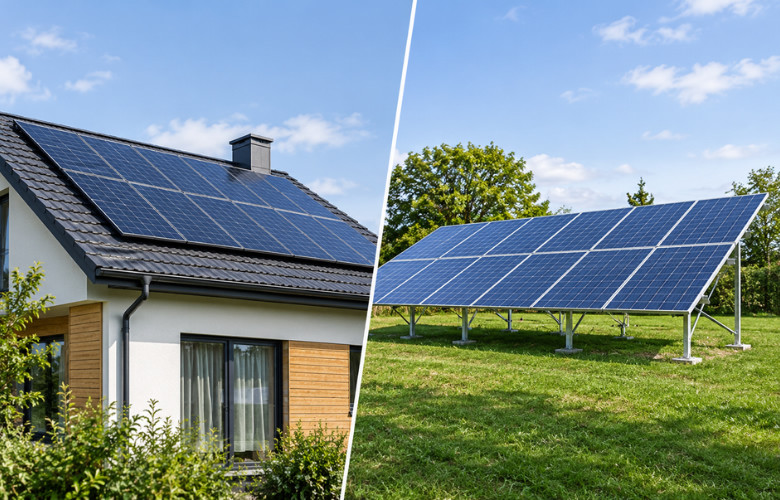
Most people start solar research by asking which setup produces more power. That question skips the one that usually decides the project: what can your property actually support? Here is what ground-mount solar panels and rooftop solar panels each need from your home, land, and permit office.
Key Takeaways
- Rooftop solar panels need a sound roof with room for fire pathways.
- Ground-mount solar panels need sunny land, zoning setbacks, and a trench route.
- HOA protections vary by state and often favor roofs.
- The federal residential solar tax credit is gone for systems installed after 2025.
The Core Difference
A rooftop system reuses a surface you already have, so its age, pitch, direction, and shade become your limits. A ground array flips that deal. You choose the spot and angle, then pay for that freedom with land, digging, and extra review.
Both can pair with batteries as utilities move toward two-way grids, a shift covered in this piece on energy management. The real question is which surface can host panels safely for 25 years. Here is how to tell.
What Rooftop Solar Panels Require
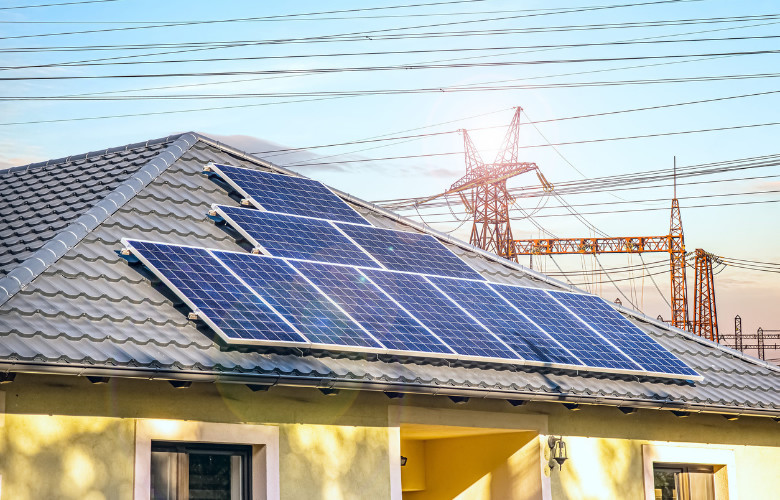
Rooftop systems look simple from the street. Underneath, they ask a lot of the structure. An installer will usually check:
- Roof age: enough remaining life to come close to the panels’ lifespan
- Framing: rafters strong enough for panels, snow, and wind
- Material: asphalt is easiest, while tile and slate need special mounts
- Direction and shade: south is best, and one big tree can cut output fast
A Roof With Life Left in It
If your shingles are halfway through their lifespan, you will likely pay to remove and reinstall the array when you reroof. The Department of Energy advises confirming the roof can support solar first. It also notes that pairing solar with a roof replacement can often save money.
Room for Fire Access Pathways
This one surprises homeowners. The Minnesota Department of Labor and Industry summarizes the common model code version: two 36-inch pathways from roof edge to ridge, plus ridge setbacks of 18 inches when panels cover a third of the roof or less and 36 inches when they cover more. Detached garages are exempt, so some owners use an outbuilding. On a small roof, these clearances can push the decision toward the yard.
What Ground-Mount Solar Panels Require
View this post on Instagram
A ground system turns part of your yard into a construction site. Zoning, soil, and buried lines all matter. Expect more planning and permit questions.
-
Open, Unshaded Land
You need a clear southern view in every season. Winter shadows stretch longer, so a perfect June spot can sit in shade by December. In return, ground arrays sit at the ideal tilt, run cooler, and are easy to clean.
-
Setbacks and a Clear Site Plan
Many codes treat a ground array as an accessory structure, like a shed. That brings property line setbacks, height caps, and sometimes a front yard ban. Reviewers will want a drawing that shows the array in relation to:
- Property lines and required setbacks
- The house and other structures
- Wells, septic fields, and easements
- The trench route to the main panel
If your survey is outdated, a drafting service like Get A Site Plan can prepare a drawing that shows those distances clearly. That can save a round of corrections. Some towns require drawings to scale, so check first.
Footings, Trenching, and Buried Utilities
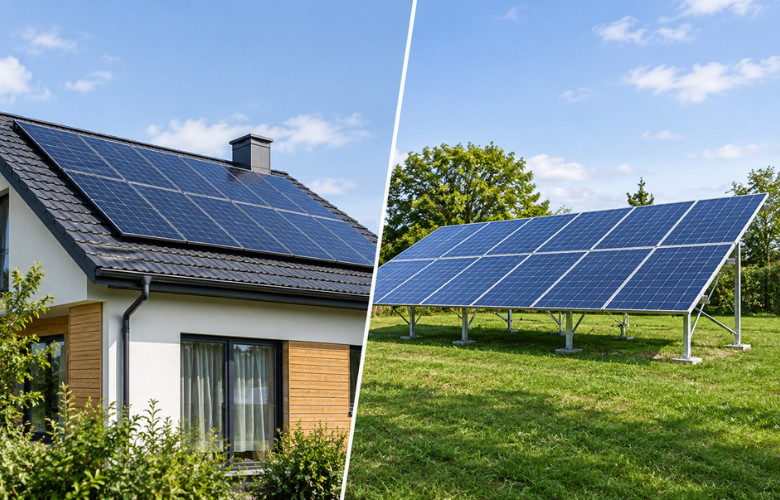
Ground mounts sit on posts, screw piles, or concrete footings below the frost line, and a buried conduit runs back to the house. The longer that trench, the heavier the wire and the bigger the bill. The Pipeline and Hazardous Materials Safety Administration notes that every state requires a call to 811 roughly 48 to 72 hours before digging. Skip it, and you risk a cut gas line and a fine.
Property Requirements at a Glance
Here are the main demands side by side. Use it as a quick filter. Any row where your property falls short is worth raising early.
| Requirement | Rooftop Solar | Ground-Mount Solar |
|---|---|---|
| Space | Roof area after code clearances | Yard area plus zoning setbacks |
| Structure | Sound roof and strong framing | Stable soil and frost-depth footings |
| Orientation | Limited to existing roof planes | Free choice of direction and tilt |
| Code clearances | Fire pathways and ridge setbacks | Property line setbacks, height limits |
| Digging | Usually none | Footings and a trench |
HOA Rules and State Law: The Extremes
State law decides how much say an HOA gets. Some states protect solar strongly, while others leave covenants in charge. The gap between roof and yard protection is where many ground-mount plans stall.
Florida’s solar rights statute, explained by the Florida Solar Energy Center, blocks covenants that prohibit solar collectors installed on buildings. The HOA may pick the location, but only facing south or within 45 degrees east or west of due south. Because the wording centers on buildings, a freestanding yard array lacks the same clear protection.
Texas goes further on yards. Under Texas Property Code Section 202.010, an association can bar devices placed anywhere other than the roof or a fenced yard, and it can prohibit a yard device taller than the fence line. That cap alone can make a full-size ground array very hard to approve. So, is it worth it? Find out:
Permits and the Money Side

Both setups usually need building and electrical permits, an inspection, and utility approval. Roofs may need structural review, ground mounts zoning review. According to the IRS, the residential clean energy credit is not allowed for expenditures made after December 31, 2025, and an expenditure counts as made when installation is finished, not when you pay.
Paying cash has a ripple for retirees. A large IRA withdrawal raises income, and provisional income rather than AGI alone decides how much Social Security becomes taxable. A tax professional can help.
Which Option Fits Your Property?
- Your roof is young, faces roughly south, and has little shade
- Your lot is small or your HOA is strict
- You have open, sunny land clear of property lines
- Your roof is old, shaded, or facing the wrong way
Frequently Asked Questions
The Bottom Line
The best solar setup is the one your property can host without a fight. Check your roof, then your yard’s sun and setbacks, then what your state and HOA allow. Answer those honestly, and the choice makes itself.