

At 1 a.m., the phone is the only light in the room. If the loneliness research is right, the person holding it is living through one of the most isolating hours of their week: friends who moved away, a job that ends at a screen, another evening with no plan and no messages.
Somewhere between one scroll and the next, they’ll do something their parents would find absurd. They’ll consider paying for what used to be free.
Connection. The one thing you were never supposed to buy.

The gap between “what used to be free” and “what is now for sale” is the engine of the fastest-growing industry almost nobody discusses at dinner parties.
The paid-companionship market now spans rental families, AI girlfriends, professional cuddlers and – in the legally regulated corners of Europe – the oldest paid service of all, rebranded as a lifestyle product.
Analyst estimates for the AI companion category alone in 2026 range from about $44 billion to more than $500 billion, depending on where you draw the line, and the sector is growing at roughly 31% a year.
The scale of the underlying problem is less disputed. The WHO Commission on Social Connection reported in 2025 that roughly one in six people worldwide experiences loneliness, a condition it links to about 871,000 deaths a year.
The U.S. Surgeon General’s 2023 advisory found that around half of American adults report feeling lonely, and that the mortality risk of social isolation rivals smoking up to 15 cigarettes a day. This isn’t a sad-but-harmless human condition. It’s a health emergency with a price tag.
The weird reason nobody says out loud
Here’s the part that makes people uncomfortable. The standard explanation – “people are so lonely they’ll pay anyone to be near them” – is wrong, or at least incomplete.
If that were the whole story, the industry would look like charity. It doesn’t. It looks like a subscription business.
The weird reason is that paying removes the risk. A free friendship demands vulnerability, timing, availability and the real possibility of rejection. A paid one demands nothing except the fee.
No fear of being judged, no obligation to reciprocate, no gnawing suspicion that the other person is only being polite.
You aren’t a supplicant hoping to be chosen; you’re a customer who has already been chosen.
The transaction itself is the comfort. That’s why the market works: it sells loneliness with the rejection removed.
Hikari, the director of the film Rental Family, put it more elegantly. “People are looking for connection, even though they’re paying for that connection,” she said. “The film explores how transactional relationships intersect with genuine emotion.”
The free stuff collapsed first
The market didn’t create the loneliness. It moved into a vacuum. The free sources of connection have been quietly dismantling for decades, and the Surgeon General’s advisory reads like an autopsy.
In 1990, about 27% of Americans said they had three or fewer close friends. By 2021, that figure was 49%.
People aged 15 to 24 cut their in-person time with friends by nearly 70% between 2003 and 2020, from about two and a half hours a day to forty minutes.
Single-person households have more than doubled as a share of U.S. homes since 1960.
The result, per Pew Research, is that 63% of men under 30 now describe themselves as single, against 34% of women the same age.
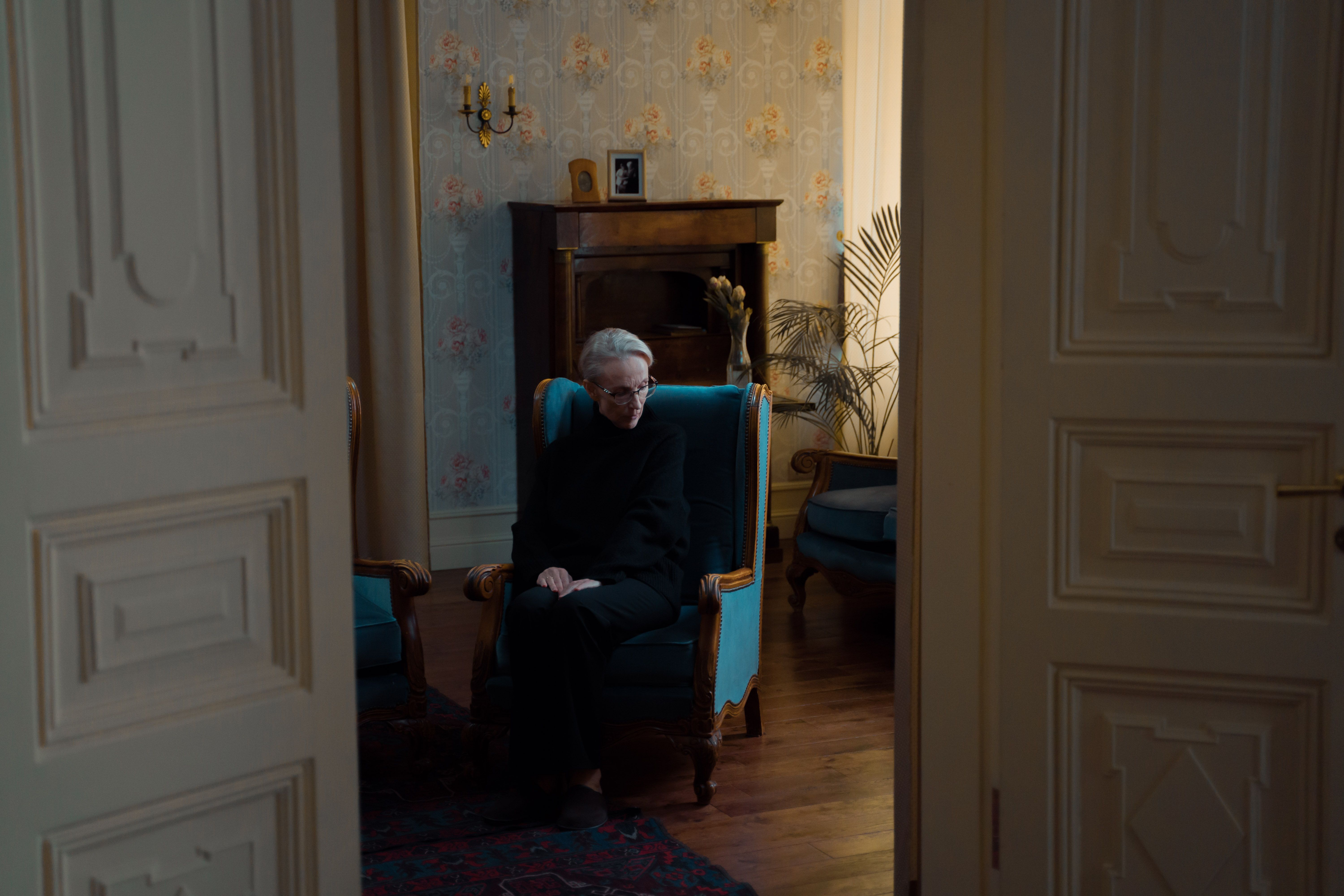
Notice who’s loneliest now. It isn’t the elderly woman in the quiet flat – though she’s still there, and she still matters.
The WHO found loneliness most common among adolescents and young adults, with roughly one in five affected.
The loneliness crisis has a young face, and it’s wearing earbuds. That inversion – young, digitally connected people reporting the most isolation – is the single most counterintuitive finding in this whole story, and it’s the reason the industry’s growth curve points straight up.
What people are actually buying
Look across the whole market and a strange thing appears: the services aren’t really competing with each other, because nobody buys all of them. Each one captures a different slice of the same underlying need. Here’s the landscape, priced as of mid-2026.
| Tier | What you’re actually buying | Rough price | Scale |
|---|---|---|---|
| Rental friend & family (Japan) | A stand-in spouse, parent, friend or wedding guest for a few hours of platonic presence | Simple roles pay actors ¥9,800 (≈$63); elaborate ones ¥20,000–30,000 (AP, Nov 2025) | Family Romance alone reports 5,000+ registered staff and 100,000+ requests served (company figures, 2026) |
| Professional cuddler | Booked, consensual, strictly non-sexual touch and conversation | $40–80/hr on Cuddle Comfort; top practitioners charge up to $150/hr | Cuddle Comfort says 600,000+ members worldwide; a Polish snuggle salon runs a booking waitlist (2025) |
| AI companion app | A 24/7 chatbot personality you shape into a friend, mentor or partner | Subscription-based; the usage leader projects only ~$60M in 2026 revenue | Analyst estimates for the category in 2026 range from ~$44B to $500B+; 72% of U.S. teens have tried one (Common Sense Media, 2025) |
| Escort & companion agency (Germany) | Paid company for dinner, travel, events and intimacy – legal and regulated | Booked by the hour or the night; pricing is agency-specific | ~32,300 registered sex workers and 2,250 licensed prostitution businesses in Germany at end-2024 (federal statistics) |
Prices and figures as reported by the named sources in early-to-mid 2026; the market-valuation row is the least reliable number in the table, because analysts disagree about the category’s borders by more than tenfold.
Japan ran this experiment first
For the cleanest case study, look at Japan, which has been industrialising loneliness longer than anyone.
Single-person households now account for more than a third of all households there, in one of the most aged societies on Earth.
But it’s the culture that made the rental boom possible: a deep reluctance to burden others means paying a professional feels more polite than asking a real friend for a favour.
You pay by the hour, Hikari noted, and that can feel almost reassuring – the relationship stays professional, and nobody owes anybody anything.
The market responded with hundreds of companies. The best known, Family Romance, says it keeps a roster of more than 5,000 registered stand-ins nationwide and has served over 100,000 requests – everything from wedding guests to a “scolding proxy” to a founder who has played father to 35 children across 23 families.
The 2026 Brendan Fraser film Rental Family turned the whole phenomenon into Hollywood material.
Chikako Ozawa-de Silva, an Emory University professor and author of The Anatomy of Loneliness, calls the industry a “Band-Aid” on a deeper problem – though one she is not opposed to, if it buys people time to find real solutions.
That is the crux of the entire debate, and it applies to every tier of the market, not just the rental families.
The billion-dollar AI girlfriend problem
No corner of the market is growing faster – or producing harder-to-trust numbers – than AI companionship.
The Common Sense Media study from 2025, run with researchers at NORC at the University of Chicago, found that 72% of American teens aged 13 to 17 have used an AI companion at least once, and 52% use one regularly.
A third had chosen an AI over a real person for a serious conversation, and 31% said the AI chat felt as satisfying as talking to a human, or more so.
The money side is where it gets strange. Precedence Research, the firm behind most of the headline numbers, values the global AI companion market at about $48.6 billion for 2026 and projects roughly $552 billion by 2035. But the category’s usage leader, Character.AI, is projected to bring in only about $60 million in revenue this year.
Both figures can be true, because they’re counting different things: the forecast wraps in any AI product that keeps you company, while the revenue is what actual customers actually pay.
The industry is enormous in attention and tiny in monetisation – which is exactly what a boom looks like at the start.
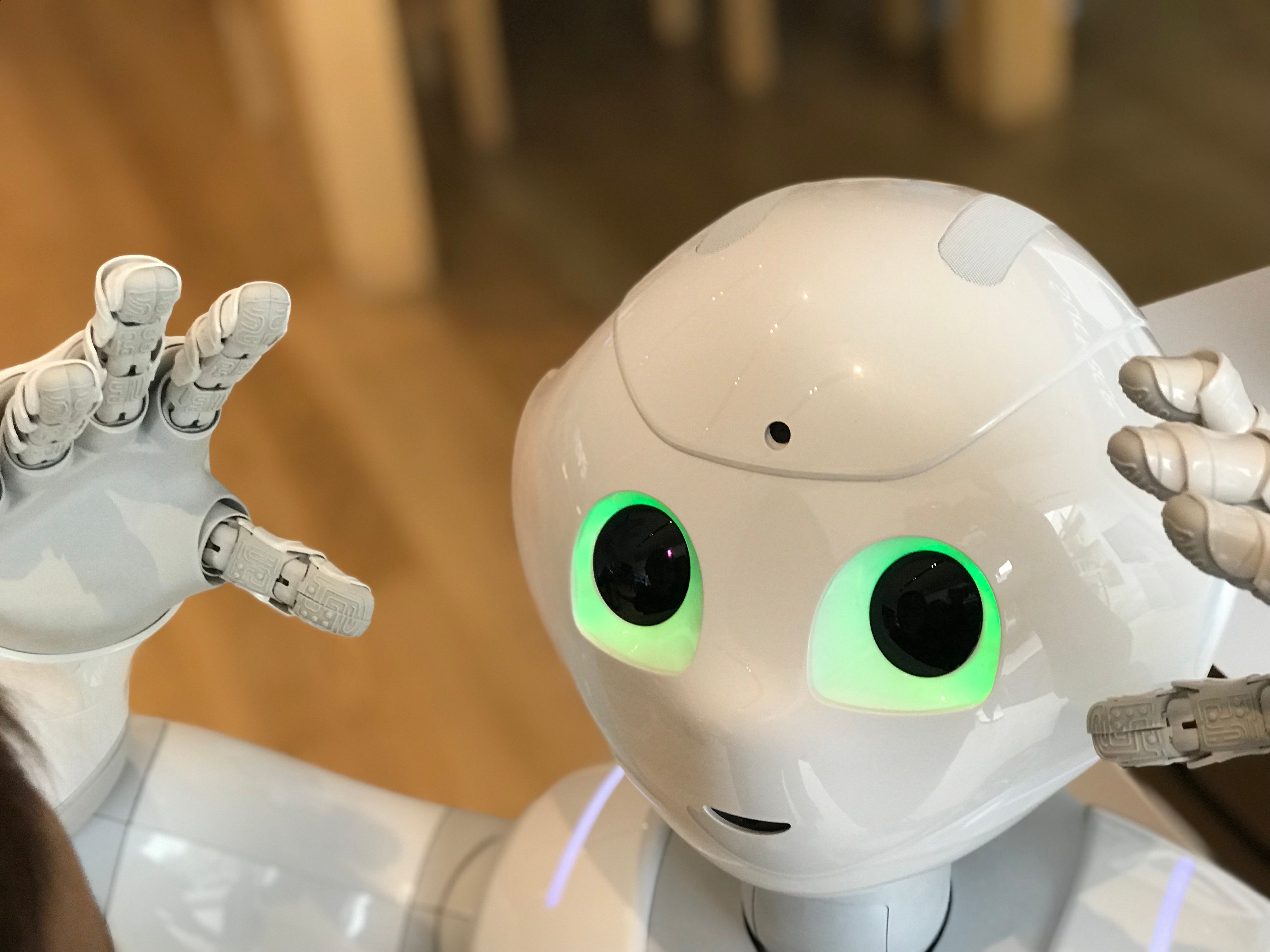
The discomfort is real, though. The same Common Sense report recommends that nobody under 18 use these platforms, citing weak age gates and the risk of substituting an algorithm for friendship.
Industry surveys claim most users feel less lonely within a month; a 2025 study of more than 1,100 companion-app users found that heavy emotional self-disclosure to an AI tracked with lower overall well-being.
Both things can be true at once. My honest read is that adoption ran ahead of the evidence – 72% of teens were using these tools before anyone could say whether they help or harm, and the industry monetises the ambiguity.
Cuddle therapy and the touch gap
Then there’s the purely physical end of the market. Professional cuddling – consensual, strictly non-sexual booked touch – has grown from a curiosity into a real service category.
Cuddle Comfort, one of the largest platforms, says it has more than 600,000 members worldwide, with sessions typically running $40–$80 an hour.
Top practitioners like New York ex-teacher Ella Love charge $150 an hour and report earnings of $60,000–$100,000 a year.
In Poland, a snuggle salon named Ania Od Przytulania is so popular it runs a waiting list, with regulars aged 40 to 60 booking weekly hour-long sessions.
Here’s the uncomfortable part: there is essentially no rigorous evidence that any of it works. As Gavin Hosking, a researcher quoted in The Conversation’s coverage of cuddle therapy, put it: “The popularity of cuddle therapy may say as much about social conditions as it does about the service itself.”
No peer-reviewed studies directly examine the effects of paying a professional cuddler, and the field is entirely unregulated – no training standards, no complaints process, no governing body.
The people selling it define the boundaries; the people buying it are often at their most vulnerable. I don’t think the service is nonsense, but I also don’t think “evidence” is the right word for what it runs on.
The legal, regulated end: sex work as a service economy
The oldest form of paid companionship has undergone the strangest transformation of all. In Germany, sex work has been legal and taxable since 2002, and since 2017 the Prostituiertenschutzgesetz has required workers to register and operators to hold licences.
The federal statistics office counted about 32,300 registered sex workers and 2,250 licensed prostitution businesses at the end of 2024.
What was once legally dismissed as an “immoral practice” is now a regulated service economy with mandatory health counselling, hygiene rules and a small pile of tax paperwork.
The marketing has changed to match.
Type escort München into a search engine and you’ll find agencies that lead with casting processes, discretion guarantees and what one of the city’s leading high-class agencies markets as the “Girlfriend Experience” – the promise that what you’re buying is a convincing simulation of being with someone who actually likes you.
Premium agencies now sell dinner dates, travel arrangements and “cyber dates” alongside the traditional business. The escort industry has absorbed the same lesson as the rental family industry: the sex is often the smallest part of what’s being sold.
What the boom says about us
Stepping back, the shape of all this is uncomfortable in a way that goes beyond the individual services.
When loneliness became a public-health emergency, governments appointed a UK Minister for Loneliness in 2018, a Japanese one in 2021, and wrote advisory after advisory. The market responded faster, with better branding and a smoother checkout.
I’d argue the industry’s growth rate is the single best measure available of how badly the free infrastructure of connection has failed.
That leaves a responsibility to tell two kinds of services apart. Ones that point people back toward real relationships – a rental friend who models how to hold a conversation, a cuddle practitioner who models healthy boundaries, a social group that costs less than a subscription – are bridges to the free stuff.
Ones engineered to maximise time-in-app, selling emotional dependence on a monthly plan, are traps dressed as comfort. Both are legal. Both are growing. They are not the same thing, and conflating them is how this industry’s worst actors get cover.

So which would you take: the guarantee, or the risk? I know my answer, and I also know the industry is betting heavily that most people choose the guarantee.
The weirdest part of the companionship boom isn’t that people pay for connection. It’s that in 2026, the paid version often feels safer than the real thing – and that a growing number of us have decided that’s a reasonable trade.
How this article was put together
The loneliness statistics come from the WHO Commission on Social Connection’s 2025 report, the U.S. Surgeon General’s 2023 advisory and Pew Research, all checked on 26 August 2026.
The AI companion figures draw on Common Sense Media’s 2025 survey of 1,060 teens and industry market reports; analyst valuations for the category vary by more than tenfold depending on definition, so treat those headline numbers as direction rather than precision.
Japan figures are company-reported or from wire reporting. The German sex-work figures are from end-2024 and are revised periodically, and market forecasts will need rechecking annually.