
Installing commercial backflow preventers in apartment buildings, condominium complexes, and mixed-use properties requires more than basic residential plumbing experience. Contractors must understand cross-connection control, equipment specifications, and local plumbing regulations before beginning work.
Unlike single-family homes, larger properties may contain shared water connections, fire protection systems, and mechanical equipment that create additional contamination risks.
Incorrect installation can result in failed inspections, expensive repairs, or compromised drinking water safety.
Consulting professional plumbing guides helps residential contractors understand commercial backflow preventer installation requirements, select suitable equipment, and avoid common mistakes.
Navigating Commercial Plumbing Codes
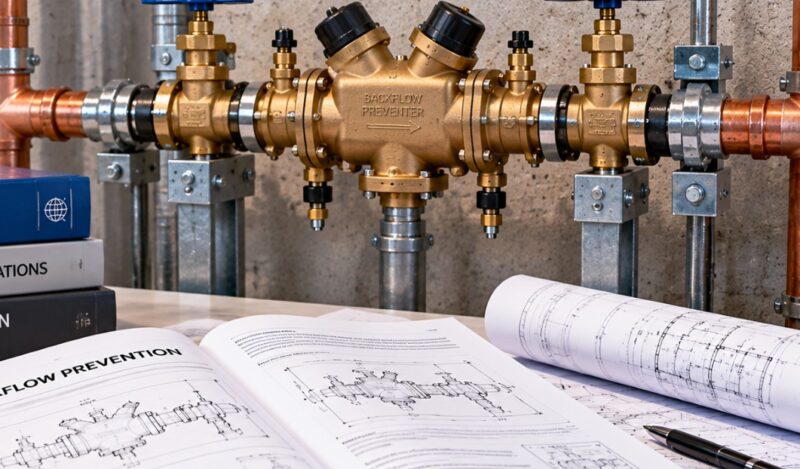
Commercial plumbing codes differ significantly from residential codes, especially when it comes to devices that protect water supplies from contamination. A prime example is the requirement for double check valve assemblies or reduced pressure zone devices in certain commercial settings, both of which have specific installation parameters.
Contractors who rely solely on residential experience may overlook critical details such as minimum clearance distances or required test cocks on commercial-grade units. Reviewing Plumber.com Plumbing Guides gives contractors access to step-by-step breakdowns of backflow preventer installation requirements, illustrated diagrams, and summaries of local code variations.
These guides provide a practical reference for interpreting updates to plumbing codes and understanding the rationale behind each requirement. By grounding their work in trusted code interpretations, contractors reduce the risk of regulatory violations and inspection failures.
Understanding Different Types of Commercial Backflow Preventers
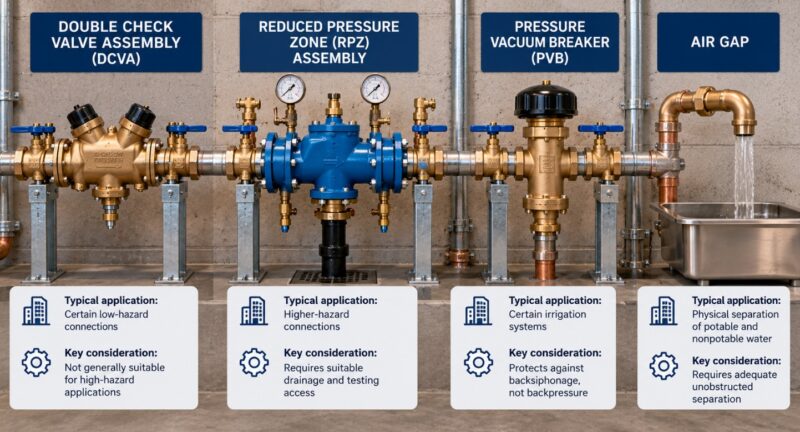
Not every commercial water connection requires the same type of backflow prevention device.
The correct assembly depends on the degree of contamination hazard, plumbing configuration, and local water authority requirements.
| Device | Typical application | Key consideration |
|---|---|---|
| Double Check Valve Assembly (DCVA) | Certain low-hazard connections | Not generally suitable for high-hazard applications |
| Reduced Pressure Zone (RPZ) Assembly | Higher-hazard connections | Requires suitable drainage and testing access |
| Pressure Vacuum Breaker (PVB) | Certain irrigation systems | Protects against backsiphonage, not backpressure |
| Air Gap | Physical separation of potable and nonpotable water | Requires adequate unobstructed separation |
A double check valve assembly may be acceptable for one connection but insufficient for another.
Contractors should verify device approvals, pressure requirements, and hazard classifications before purchasing equipment.
Preventing Cross-Contamination Risks in Multi-Unit Buildings
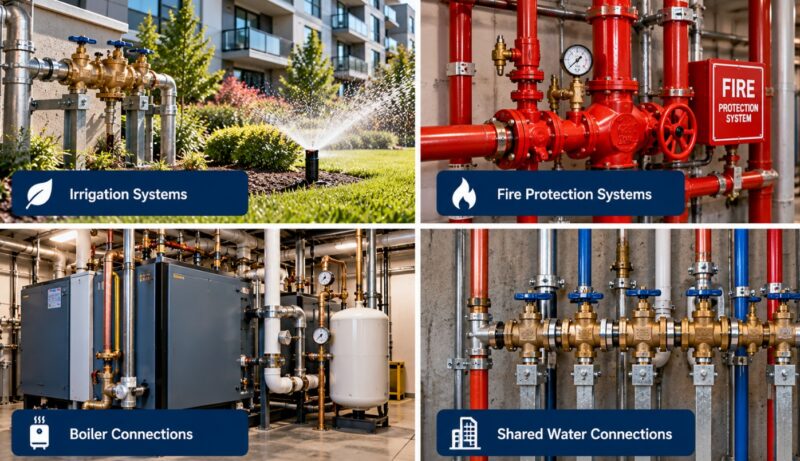
Apartment complexes and condominium buildings often have interconnected plumbing systems serving multiple occupants.
A single improperly protected connection can potentially introduce contaminants into a shared drinking water supply.
Common areas requiring attention include:
- Irrigation systems: Fertilizers and pesticides can create contamination hazards.
- Fire protection systems: Certain configurations and additives require specific backflow protection.
- Boiler connections: Chemical treatment systems may introduce hazardous substances.
- Shared water connections: Interconnected plumbing increases the importance of identifying cross-connections.
Contractors should inspect existing plumbing layouts and identify potential hazards before deciding where backflow prevention assemblies belong.
Technical guides can help identify common risks, but actual installation requirements depend on local regulations and the building’s configuration.
Leveraging Expert Plumbing Guides for Complex Backflow Projects
Retrofitting an older commercial building introduces challenges that may not appear during standard residential installations.
Contractors might encounter limited mechanical room space, outdated piping, inaccessible valves, or incomplete plumbing documentation.
Professional plumbing guides provide useful references for understanding installation arrangements, equipment compatibility, and testing procedures.
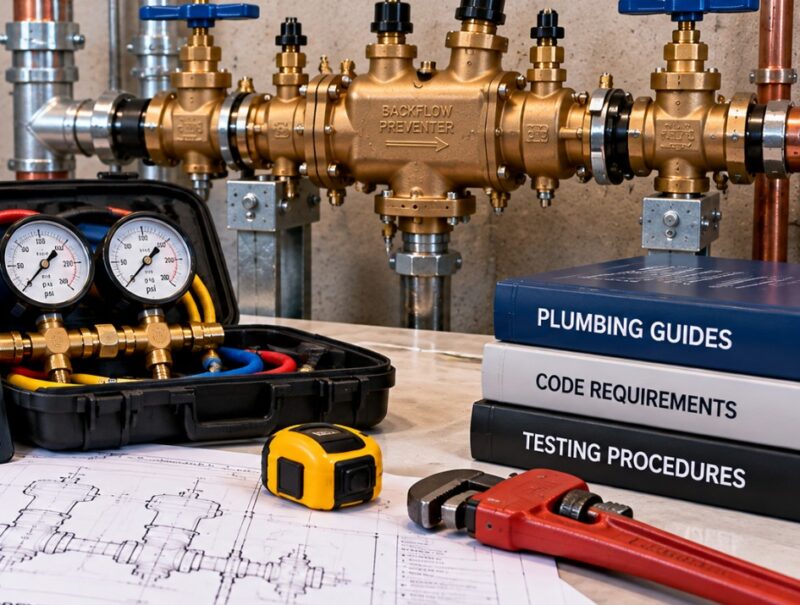
What Contractors Should Check Before Installation
- Identify contamination hazards. Determine which plumbing connections require protection.
- Choose the correct assembly. Confirm that the device meets applicable standards and local requirements.
- Verify water pressure. Account for pressure loss through the selected backflow preventer.
- Check installation clearances. Provide sufficient access for inspection, testing, and maintenance.
- Plan drainage. RPZ assemblies require appropriate arrangements for relief valve discharge.
- Confirm testing requirements. Determine whether a certified or otherwise authorized tester must inspect the completed installation.
Contractors can reference the step-by-step backflow preventer testing process for additional technical guidance.
However, manufacturer instructions and local plumbing regulations should always take precedence over general educational resources.
Common Commercial Backflow Preventer Installation Mistakes
Even experienced plumbers can overlook important differences between residential and commercial backflow prevention systems.
Choosing the Wrong Assembly
Selecting equipment based only on pipe diameter or price can result in insufficient protection.
Contractors must consider contamination hazards and the assembly types approved for each application.
Ignoring Clearance and Drainage
Backflow prevention assemblies need accessible test ports, shutoff valves, and adequate maintenance space.
RPZ assemblies can discharge water through their relief valves, making proper drainage especially important.
Overlooking Pressure Loss
Backflow prevention devices create some resistance to water flow.
An improperly sized assembly may reduce available pressure and affect fixtures or equipment throughout the building.
Skipping Performance Testing
Correct installation does not guarantee that an assembly functions properly.
Many jurisdictions require initial testing by an authorized tester before the device enters service.
Contractors should confirm testing procedures and documentation requirements before completing the project.
Mitigating Contractor Liability Through Standardized Installation Protocols
Commercial plumbing projects can expose contractors to significant liability when installations fail or create contamination risks.
Following established installation procedures helps reduce mistakes while documenting the work performed.
Contractors should maintain records of:
- Assembly manufacturer, model, and serial number
- Equipment approval and installation specifications
- Installation photographs and location details
- Initial testing results
- Required inspection approvals
- Future maintenance and testing schedules
These records help building owners manage ongoing compliance and make future maintenance easier.
They also provide evidence of the installation procedures followed, although documentation alone does not guarantee compliance or eliminate liability.
Why Regular Backflow Preventer Testing Matters
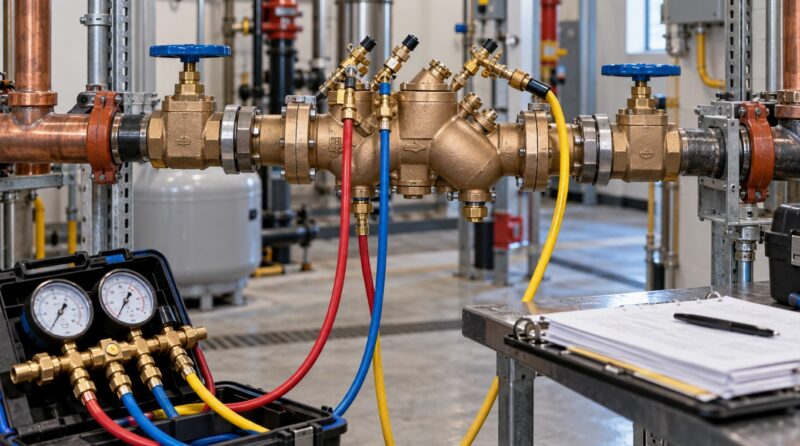
Commercial backflow prevention requires ongoing maintenance after installation.
Internal seals, check valves, and springs can deteriorate, while debris and mineral deposits may affect performance.
The USC Foundation for Cross-Connection Control and Hydraulic Research recommends annual field testing of backflow prevention assemblies. Local authorities determine the actual testing requirements.
Contractors should ensure that assemblies remain accessible for routine testing and that building owners receive relevant maintenance documentation.
Frequently Asked Questions
Can residential plumbers install commercial backflow preventers?
They may perform commercial installations if their licenses and local regulations authorize the work. Additional certification or permitting requirements may apply.
What is the difference between a DCVA and an RPZ assembly?
A DCVA uses two independently operating check valves and is generally intended for lower-hazard applications. An RPZ assembly includes a relief valve and provides protection suitable for certain higher-hazard connections.
Do commercial backflow preventers require annual testing?
Many jurisdictions require annual testing, although specific schedules depend on local water authority regulations.
What happens if a backflow preventer fails inspection?
The assembly may require repair, replacement, relocation, or retesting before the installation receives approval.
Conclusion
Installing commercial backflow preventers requires careful planning, appropriate equipment selection, and an understanding of local plumbing codes.
Professional plumbing guides help residential contractors identify contamination hazards, understand installation procedures, and prepare for required inspections.
Combining these resources with manufacturer specifications and local regulatory requirements reduces installation mistakes and supports long-term drinking water safety.