
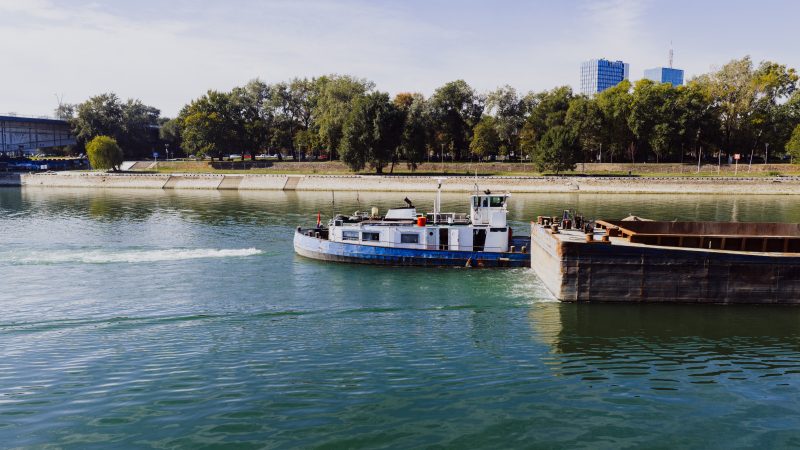
5.8 million tonnes. That is how much freight moved on the Austrian Danube in 2025, the lowest annual figure Statistics Austria has recorded, 11.6% below 2024 and under the previous record low set in 2023.
The strange part is what happened alongside it. The number of individual transport operations rose 12%, to 6,219. Average load factor fell from 66% to 53.9%. More barges moving, each carrying less.
That gap is where the case for IoT sensors and digital twins actually lives. Not in the screens, and not in the word “visibility”. In the difference between what a barge could carry and what it did carry, and between a delivery window you can keep and one you cannot.
I went through the 2025 market data, the EU research on river twins and the lock modernisation reports. The short version: the hardware is the easy part. The money sits in three decisions, how deep to load, which arrival date to promise, and when to switch to road or rail. Everything else is instrumentation.
The most valuable sensor on a barge measures how deep it sits
A modern inland vessel can already produce dozens of signals. Engine data over J1939 or MODBUS, fuel flow on supply and return lines, tank levels, rudder angle, GPS and AIS, hatch status, bilge alarms, and on larger units hull stress. Retrofits are routine: a gateway box, a SIM card, an encrypted tunnel to shore.
None of that is exotic anymore. The signal that pays for the installation is draught.
Revenue on the water is tonnes, and tonnes are limited by how deep the hull can sit. A draught reading that is five centimetres optimistic is not a data-quality footnote: it is a loading decision made on the wrong side of a sandbar. On the Danube in 2025 the available margin moved by more than half a metre within a single season, which is the difference between a full hold and a partial one.
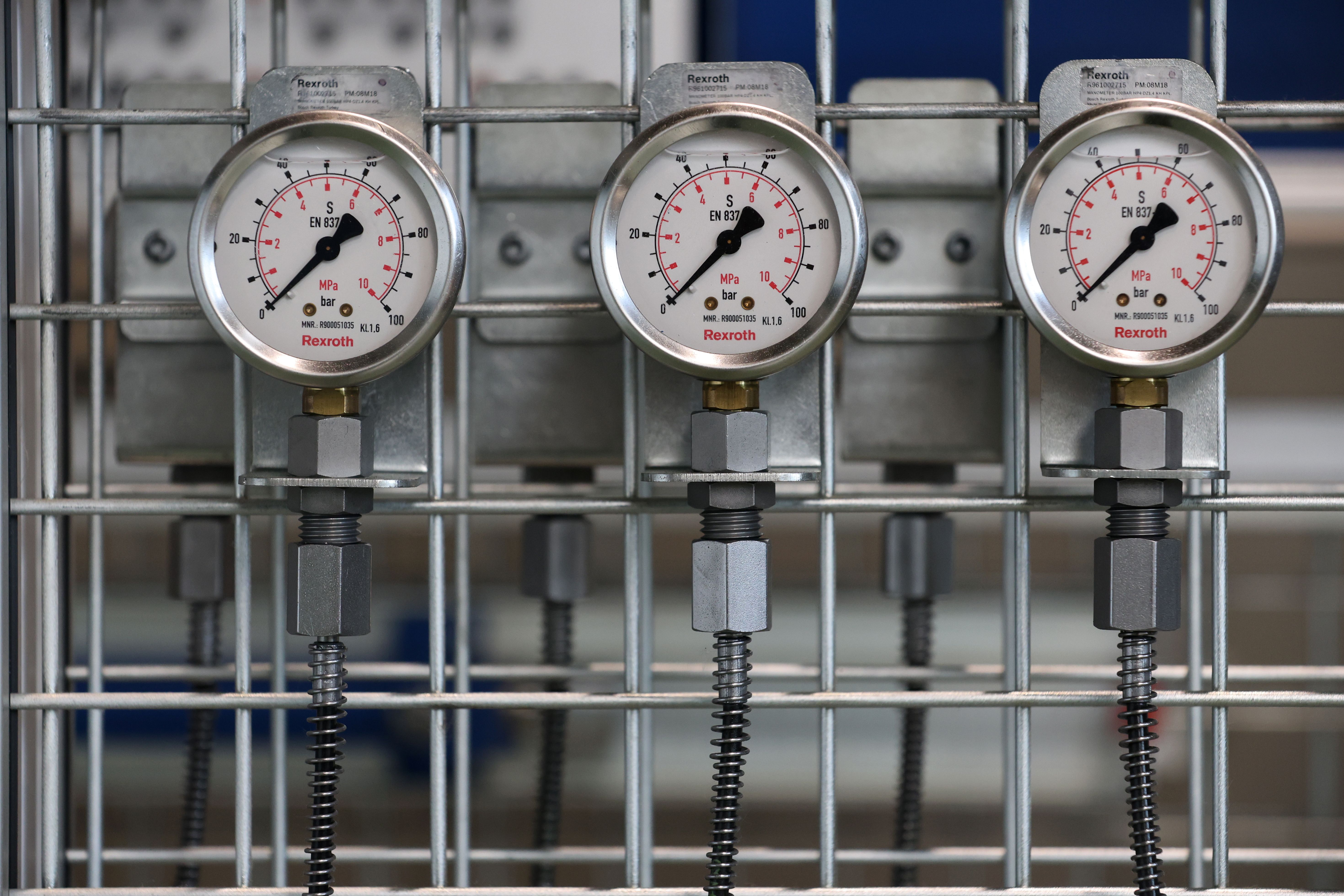
The catch is calibration. A twin fed by an uncalibrated draught sensor is a very confident liar. When a vendor quotes you a platform, ask for the calibration certificate and the drift-check interval before you ask about the dashboard. If those two answers are vague, the rest is decoration.
What a digital twin adds that a dashboard does not
A dashboard tells you where the barge is and what the engine is doing. A twin runs a model of the vessel or the waterway, so you can ask what happens next. On the Danube that modelling is happening at three levels, and the most mature one is not on the vessel at all.
The water-level twin is the one that matters most. The EU-funded CRISTAL project built twins of a lock, a smart buoy and the river’s depth forecast, and reported navigability forecasts up to two weeks ahead. A 2026 paper in Maritime Economics & Logistics analysed that work and put the value plainly: predictive depth data lets operators plan around low water instead of reacting to it. The same paper is honest about the limits, which are data granularity and interoperability between systems.
For companies handling Danube transport and logistics, the practical value lies in combining depth forecasts with vessel availability and delivery commitments. That helps them decide how much cargo to load and whether the planned arrival date is realistic before committing a barge.
Lock twins work closer to the metal. Acoustic emission sensors on lock gates and radar scanning of the chambers catch wear before it becomes an unplanned closure. Port twins, such as the one demonstrated in Duisburg under the MultiRELOAD project, pull weather, traffic, water quality and vessel emissions into one environment. MultiRELOAD involved 24 partners across eight countries and both the Rhine-Alpine and Danube corridors, which tells you how much of this is still pilot work.
Here is the test I would apply to any product sold as a twin. Name the decision it changes and the money attached to that decision. If the answer is “situational awareness”, you are looking at a map with a subscription.
The bottleneck has moved to the handoffs
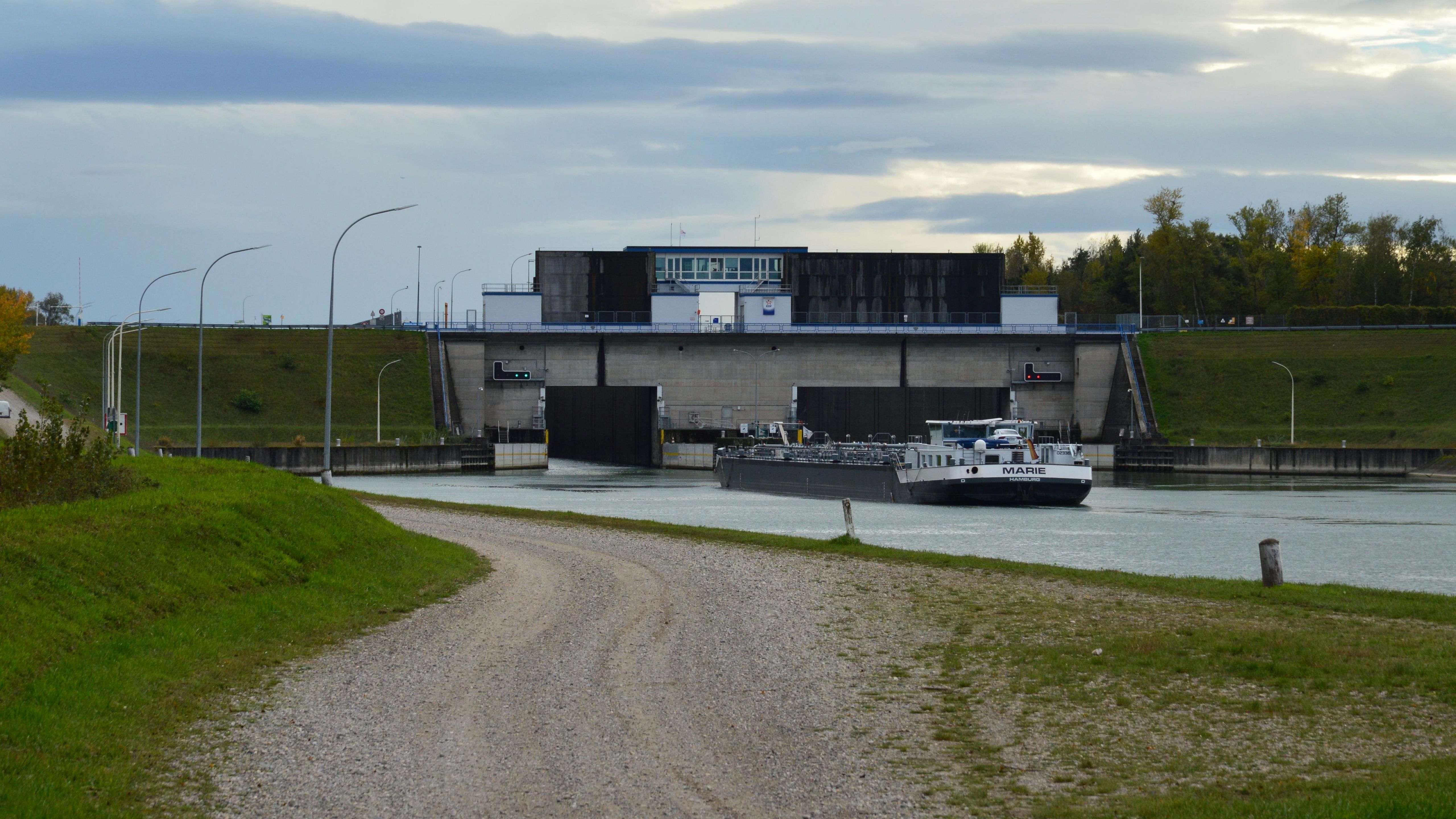
On the Danube, the river itself is rarely the slowest part. Locks and terminals are. The Iron Gates locks at the Serbian-Romanian border handle more than 10 million tonnes a year and lift vessels 21 to 34 metres, depending on flow. The EIB-financed rehabilitation finished in 2024, and the results are the kind of thing sensor people should study: the locking process is about 25% shorter, maintenance costs are down by up to 30%, and energy use improved by 50%, saving around 400 MWh a year.
“The visibility of the locking process has greatly improved,” Vladimir Jovičić of Goša Montaža, the company behind the reconstruction, told the EIB. That sentence is about instrumentation as much as steel.
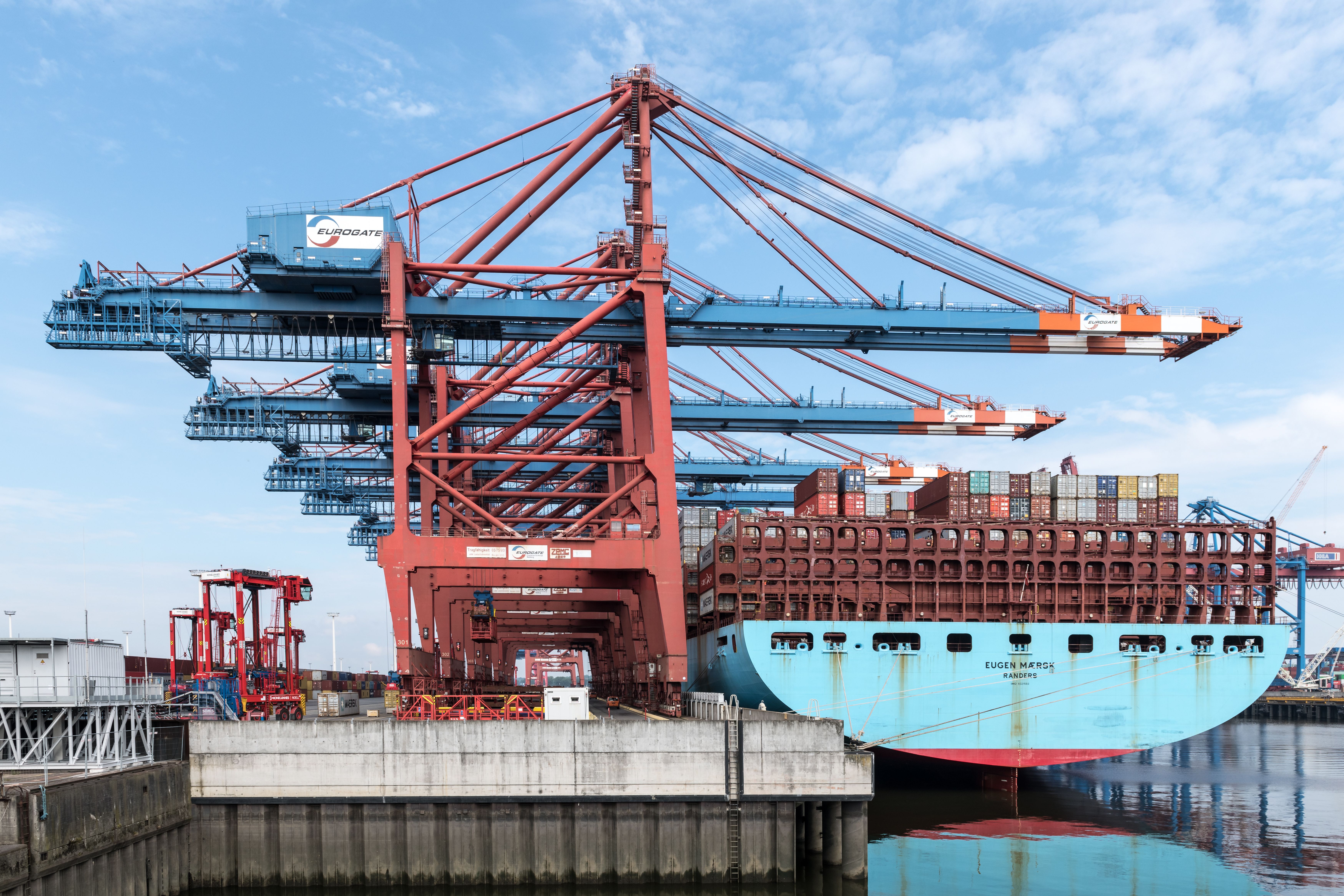
Terminals have the same problem in a different shape. In 2023, Danube shipping directors were told that cargo revisions in Galați were taking two to three days because of grain-corridor congestion, and that Constanța had more than 600 barges present on a typical day. A perfect lock forecast is worth little if the berth window is unknown. The twin earns its keep when the lock queue, the berth slot and the water level sit in the same model, because that is where the three-way trade-off actually gets decided.
What low water does to a loading plan
This is the part that separates a demo from a working system. The constraint is not a single river level. It changes week by week, and it changes the economics of every voyage.
| Period, 2025 | Upstream draught | Downstream draught | Same period, 2024 |
|---|---|---|---|
| January | 250 to 270 cm | 220 to 230 cm | 250 cm / 220 to 230 cm |
| April | 230 cm | 210 to 230 cm | 270 cm / 230 to 240 cm |
| July | 180 to 190 cm | 160 to 180 cm | 250 cm / 220 to 230 cm |
| September | 220 to 230 cm | 200 to 210 cm | 250 cm / 230 to 240 cm |
Source: Danube Commission market observation, January to September 2025, based on standard Middle Danube vessel draughts. The figures are reported operating draughts, not a guarantee for any specific hull.
By July 2025, upstream draught on the Lower Danube had fallen to 180 to 190 cm, against 250 cm a year earlier. That is not a rounding error. Reuters reported in early July that Hungarian barges were running at 30 to 40% of capacity, and that the deputy president of the Hungarian Shipping Association, Attila Bencsik, expected low-water surcharges to push rates up by as much as 100%.
No sensor adds water. What a forecast changes is the decision you make before loading: split the cargo, book a smaller lot, pre-agree the surcharge, or route to a terminal with more depth. And it changes who absorbs the cost. My view is that most charter parties still handle low-water risk badly. Better data without a clause that says who pays just moves the argument two weeks later.
The hard problem is incentives, not APIs
There is a fair objection to all of this, and it deserves stating properly. A barge operator with a thin margin may get more capacity from dredging, fleet renewal or a shallower-draught hull than from a software licence. A corridor-wide twin also asks competitors to share commercially sensitive data about cargo, rates and utilisation, and the CRISTAL paper’s authors are clear that data granularity and interoperability are still unsolved.
I would not wait for the single grand twin of the Danube. I would build an operator-level twin on my own tonnage, couple it to public water-level and lock data, and accept the patchwork. A model that covers your 20 barges and is trusted beats a corridor platform nobody feeds.
The operators closest to the cargo, the Danube transport and logistic specialists who charter tonnage across the Danube, Rhine and Main, already work this way in practice. Their edge is not the model. It is knowing which hull can take which cargo at which depth on which day, and pricing that knowledge correctly.

Five questions I would ask before paying for a twin
- Which decision changes, and what is that decision worth per year? A number, not a use case.
- Where does the draught data come from, how is it calibrated, and how often is it checked?
- What happens when the LTE link drops mid-voyage? Onboard buffering matters more than a live map.
- Who owns the data, who can share it, and does the charter party say so?
- Can it ingest public water-level, lock and port data without a human retyping it?
If the first two answers are weak, stop. Everything after that is a screensaver.
What progress will look like
Not a single pane of glass for the whole river. More likely: more barges that know their draught to within a few centimetres, more terminals publishing reliable berth windows, and contracts that put low-water risk with the party who can manage it. The 2025 numbers, more trips carrying less, are what the absence of that costs.
Sensors do not create water. They let you sell uncertainty honestly, and on a river that swung from 270 cm to 180 cm in six months, that is worth more than a control room.
Frequently asked questions
Can IoT sensors be retrofitted to older Danube barges?
Yes. Engine and tank data can usually be read from existing J1939, MODBUS or NMEA interfaces, and draught, hatch and bilge sensors are add-on hardware. The constraints are power, connectivity and calibration, not the age of the hull.
Do digital twins fix low-water disruptions?
No. They forecast and quantify the constraint, which lets you replan cargo, route or mode earlier. The river still sets the maximum draught, and no model changes that.
How far ahead does a river twin need to forecast?
It depends on the decision. Loading and chartering decisions benefit from one to two weeks, which is the horizon CRISTAL demonstrated. Berth and lock sequencing needs hours, not weeks.
Who should own the data from a barge?
The party paying for the sensors usually owns the hardware, but access rights should be written into the charter party. Otherwise the operator, the charterer and the terminal end up with three partial pictures.
What is the cheapest useful first step?
Put calibrated draught and fuel telemetry on a handful of vessels and compare it with the noon reports you already keep. If the two disagree, you have found your first saving, and you have not bought a platform yet.
How this article was put together
The freight figures come from Statistics Austria’s March 2026 release on 2025 Danube traffic, the draught table from the Danube Commission’s market observation for January to September 2025, and the lock figures from the EIB’s August 2025 account of the Iron Gates rehabilitation. The digital twin material draws on the CRISTAL project and a 2026 paper in Maritime Economics & Logistics, plus MultiRELOAD project documentation. Low-water capacity figures are from Reuters reporting in July 2025. I did not interview any operator for this piece. Annual statistics are revised, so recheck tonnage and load-factor numbers after each spring release.