

A dental infection rarely stays polite. It may begin as a nagging toothache or a tender spot you keep poking with your tongue, then it shifts. The pain digs in deeper, pressure builds, your face can start to swell, and suddenly the problem no longer feels limited to one tooth. Many people describe the turning point the same way: “I stopped being able to ignore it.”
A spreading dental infection is not a vague sense that something feels off. It creates very specific sensations because infection and inflammation change how nerves fire, how tissues expand, and how your immune system reacts.
Here’s a practical, symptom-focused guide to how a dental infection can feel as it progresses, how people usually experience that progression, and which sensations signal urgent danger.
For patients needing immediate assessment outside routine hours, services such as Akutt Tannlege are designed specifically for urgent dental infections and rapidly worsening symptoms.
What “Spreading” Means In Real Life
When clinicians say a dental infection is spreading, they usually mean one of several patterns.
| Stage | Description |
|---|---|
| Local Extension Around The Tooth | The infection moves from the tooth’s root into nearby gum and bone, often forming an abscess (a pocket of pus). Pain and pressure intensify, and swelling becomes more obvious. |
| Cellulitis In Nearby Soft Tissue | Instead of a contained pocket, the infection diffuses through soft tissue. Swelling appears broader and feels firm or tight rather than sharply defined. |
| Deeper Facial Or Neck Space Involvement | The infection can travel along tissue planes in the face and neck. Symptoms may include lockjaw, difficulty swallowing, drooling, voice changes, and increasing airway risk. |
| Systemic Spread | The infection affects the whole body. Fever, malaise, fast heart rate, confusion, and, in severe cases, sepsis can develop. |
One evidence-based point matters here: antibiotics alone often do not stop progression if the source tooth is not treated and drained. Definitive dental care makes the difference.
What It Feels Like At The Beginning
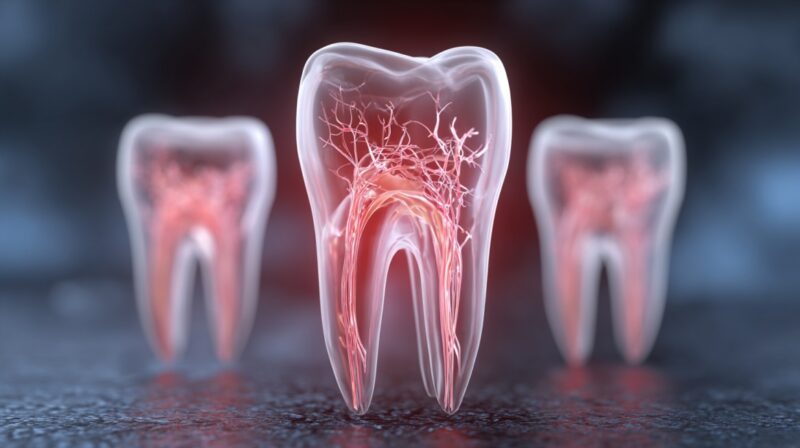
Early dental infection can feel deceptively contained. Most people can point to the tooth and name what sets the pain off.
A Deep, Throbbing Toothache
People describe it as a pulse or heartbeat inside the tooth. Sleep becomes difficult. Pain may radiate into the jaw, ear, or neck on the same side.
Why it happens: pressure rises in confined spaces near the tooth root. Nearby nerves amplify the signal and refer pain into surrounding areas.
Pain With Biting Or Chewing
Biting down sends a jolt through the tooth. Even light tapping hurts. Many people start chewing on the opposite side without realizing it.
Sensitivity That Changes Over Time
Cold or heat may trigger sharp pain early on. As the infection advances, the sensation can shift into constant aching, or the tooth may feel oddly numb while the surrounding tissues hurt more.
Bad Taste, Bad Breath, Or A Gum Bump
If an abscess drains into the mouth, people often notice a sudden foul taste and temporary relief as pressure drops.
That relief is misleading. Drainage does not remove the cause.
When It Stops Feeling Like “Just A Tooth”
View this post on Instagram
Once infection pushes beyond the tooth’s root, the experience becomes more physical and harder to ignore.
Visible Or Palpable Swelling
Swelling may appear in the gum first, then spread to the cheek, jawline, under the jaw, or into the neck. Skin can feel tight, warm, and tender.
People often describe a stretched or heavy sensation, as if the area is filled from the inside.
Deep Pressure Rather Than Sharp Pain
Instead of stabbing pain, the dominant feeling becomes pressure. Some compare it to a balloon expanding behind the cheekbone or jaw.
Tender Lymph Nodes And Feeling Unwell
Lymph nodes under the jaw or along the neck may swell and ache. Fatigue creeps in. You may feel run down or mildly sick even before fever appears.
Fever, Chills, Or Sweats
Fever alongside dental swelling changes the risk profile. It signals that the body is fighting more than a local problem.
Red-Flag Sensations That Suggest Deeper Spread
When infection reaches deeper facial or neck spaces, symptoms escalate fast. People remember this stage clearly because it feels alarming.
| Symptom | Description |
|---|---|
| Lockjaw And Trouble Opening The Mouth | Trismus often limits mouth opening to one or two finger widths. Speech can feel strained. Trying to open wider hurts. |
| Difficulty Or Pain With Swallowing | Swallowing may feel blocked or painful. Some people drool because swallowing becomes uncomfortable. Tightness in the throat is a common description. |
| Voice Changes Or Muffled Speech | Speech can sound thick or muffled, sometimes called a “hot potato” voice. Talking takes effort. |
| Swelling Under The Tongue Or In The Floor Of The Mouth | In rare but dangerous infections such as Ludwig’s angina, the floor of the mouth becomes firm and tender. The tongue may feel too large for the mouth. Saliva pools because swallowing is difficult. Anxiety rises as breathing feels harder. |
| Breathing Difficulty Or A Sense Of Airway Narrowing | Any change in breathing is an emergency sign. Swelling that interferes with airflow needs immediate evaluation. |
When The Whole Body Gets Involved
View this post on Instagram
According to ADA, dental infections can trigger systemic illness, especially once fever and widespread inflammation set in.
- Fever and chills
- Rapid heart rate
- Weakness, shakiness, or dizziness
- Confusion or trouble thinking clearly in severe cases
According to the Cleveland Clinic, emergency warning signs often cited include fever of at least 100.4°F (38°C), difficulty swallowing, elevated heart rate, facial swelling, and confusion. When body-wide symptoms layer on top of dental pain and swelling, assume escalation until proven otherwise.
Eye, Temple, And Neurologic Symptoms
Most dental infections never reach this stage, but recognizing the pattern matters because the consequences are serious.
Headache And Eye Swelling
Rare complications like cavernous sinus thrombosis can follow facial infections. People may feel a severe headache, often behind the eye, along with swelling around one eye that can spread.
Vision And Eye Movement Problems
Double vision, eye pain, or trouble moving the eye can occur. Fever and worsening lethargy often accompany these symptoms.
Dental pain paired with eye swelling or neurologic changes should trigger urgent emergency care.

A Realistic Progression Timeline
Every case differs, but many people describe a similar arc.
- Early phase: localized toothache, sensitivity to temperature, pain when chewing.
- Expansion: swelling in gum or face, foul taste, bad breath, jaw tenderness, possible fever.
- Escalation: difficulty opening the mouth, swallowing pain, neck discomfort, drooling, voice change, rapidly increasing swelling.
- Emergency territory: breathing difficulty, confusion, swelling spreading toward the eye, high fever with systemic symptoms.
Reaching the third or fourth stage means waiting for improvement carries real risk.
Is It Bad Enough For The Emergency Room?
| What You Feel Or See | Why It Matters | Recommended Action |
| Facial swelling that keeps growing | Suggests spread beyond the tooth | Same-day urgent dental or medical evaluation |
| Fever with tooth pain and swelling | Risk of systemic involvement | Same-day urgent evaluation |
| Trouble swallowing, drooling, muffled voice | Possible deep space infection | Emergency evaluation |
| Breathing difficulty or noisy breathing | Airway risk | Emergency department immediately |
| Lockjaw with limited mouth opening | Marker of severe infection | Urgent or emergency evaluation |
| Swelling moving toward the eye | High-risk spread pattern | Emergency evaluation |
| Confusion or severe weakness | Severe systemic illness | Emergency evaluation |
Why Speed Matters And What The Numbers Show

Dental problems drive a significant share of emergency care use, and infections play a large role.
According to research, in the United States, there were 2 million dental-related emergency department visits in 2018, representing about 1.4% of all ED visits, with most patients discharged rather than admitted.
Action for Dental Health materials citing HCUP data show that in 2009, abscesses and dental caries accounted for a large share of dental-related emergency visits, highlighting the financial and care burden of crisis-level dental problems.
A 2026 endodontic publication reports 846,629 emergency department visits in 2021 and 2022 attributed to a primary diagnosis of apical periodontitis, reflecting ongoing acute dental infection and pain presenting in emergency settings.
Those numbers do not mean every toothache becomes dangerous. They do show how often people reach severe pain or swelling before definitive treatment happens.
What Clinicians Listen For When You Say “It’s Spreading”
- How fast swelling developed
- Where swelling sits: cheek, under jaw, neck, near the eye
- How wide you can open your mouth
- Swallowing and voice changes
- Fever or whole-body symptoms
- Conditions that raise risk, such as diabetes, chemotherapy, or steroid use
Reviews of severe odontogenic infections consistently list pain, swelling, fever, lockjaw, swallowing difficulty, and voice changes as key warning features.
What You Can Do While Seeking Care

Supportive steps can ease discomfort while you arrange urgent evaluation, but they are not treatment.
- Gentle salt-water rinses may offer temporary comfort.
- Avoid pressing or attempting to drain swelling yourself.
- Follow labeled dosing for over-the-counter pain relievers unless advised otherwise.
- Skip heat packs on significant facial swelling, as heat can worsen discomfort for some people.
If breathing, swallowing, voice, eye swelling, or confusion enter the picture, bypass home measures and go straight to emergency care.
Important: Read about food ideas on what to eat after tooth extraction, be patient and safe!
The Bottom Line
A spreading dental infection announces itself through specific, escalating sensations. What begins as a toothache can turn into facial pressure, swelling, fever, and functional problems that affect speech, swallowing, or breathing.
Many people recognize the moment it crosses that line because the body no longer lets the problem fade into the background.
Paying attention to how it feels, especially changes in swelling, function, and systemic symptoms, helps guide the next step. Prompt professional care protects not only the tooth but the surrounding tissues, the airway, and overall health.