
Nothing ruins a competitive match like a sudden “lag spike” or high ping during a critical moment. Many players believe they need the most expensive plan available to compete, but the reality of gaming performance is more nuanced.
While high download numbers look great on a bill, the stability of your connection often matters more than the raw speed. In a major tech hub like Houston, Texas, the local infrastructure is rapidly evolving to meet these high-performance demands.
This guide explores the specific requirements for a lag-free experience, from bandwidth math to the importance of low latency.
Latency vs. Bandwidth: Which Matters More?

To understand gaming performance, you must distinguish between your total speed and your “ping.” Bandwidth is the amount of data your pipe can hold, while latency is the time it takes for a signal to travel to the server and back.
You could have a massive 1,000 Mbps connection, but if your latency is high, your character will still stutter on screen. For competitive play, a ping under 20ms is the gold standard for responsiveness.
Most modern games actually use very little data during active gameplay—often less than 5 Mbps. The real issue arises when the quality of that data transmission is poor. A stable connection with low latency ensures that your button presses are registered instantly. Focusing on a high-quality network path is often more effective than simply paying for a higher speed tier that you might not fully utilize during a match.
Understanding Symmetrical Speeds for Online Play
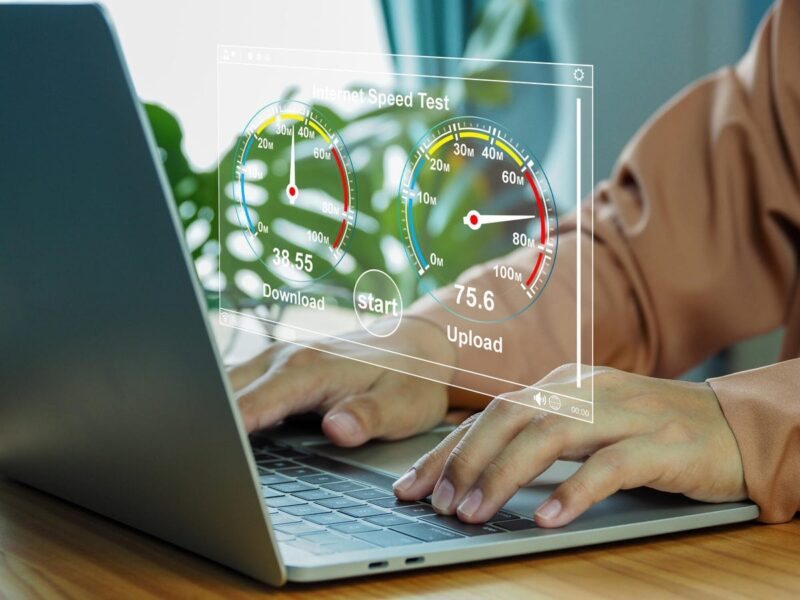
Many traditional connections are “asymmetrical,” meaning they offer fast downloads but very slow uploads. This can be a major bottleneck because multiplayer gaming requires you to send your movement data to the server just as fast as you receive information from other players. If your upload speed is too low, your actions will feel delayed to everyone else in the lobby.
When evaluating the best options for fiber internet in Houston, Texas, local gamers often prioritize providers that offer symmetrical speeds. A balanced connection ensures that your “inputs” reach the server without any digital traffic jams. Many users find that Frontier provides the low-latency, balanced connection required for consistent performance in high-stakes matches. Having equal power in both directions is the best way to ensure your home network can handle the data-heavy demands of modern competitive play.
Real-World Bandwidth Requirements per Console
While the game itself uses minimal data, you still need extra speed to account for everything else happening on your network. If you are using Discord for voice chat or streaming your gameplay to friends on Twitch, your bandwidth needs will increase significantly. You also have to consider other people in your house who might be watching 4K movies or downloading large files while you are trying to play.
- Single Player: 25-50 Mbps is usually enough for a lone gamer with a few background devices.
- Gaming Household: 200-500 Mbps is better for homes where multiple consoles are running at once.
- Pro Streamers: 1,000 Mbps ensures you can stream in high definition while maintaining a perfect ping.
The Role of Jitter and Packet Loss

Stability is the true king of online gaming, and that means minimizing jitter and packet loss. Jitter is the variation in your ping over time, while packet loss occurs when pieces of data simply “drop” during transmission.
Even a fast fiber connection can feel sluggish if the data isn’t arriving in a steady, predictable stream. These issues are often what cause the “rubber-banding” effect, where your character snaps back to a previous position.
Using a wired Ethernet cable instead of Wi-Fi is the easiest way to resolve these stability issues. While wireless technology has improved, it remains susceptible to interference from walls and other electronic devices.
A direct physical connection ensures that your data has a clear path from your console to the router. Combined with a modern light-based network, a wired setup provides the most consistent environment for winning more matches.
Future-Proofing for 4K Gaming and Beyond

As gaming technology moves toward 8K resolution and cloud-based services, the demand for high-speed data will only grow. Services like Xbox Cloud Gaming or NVIDIA GeForce NOW require much more bandwidth than traditional disc-based games because they are essentially streaming a high-definition video of the game to you. Having a robust fiber foundation ensures your home is ready for these next-generation platforms.
Massive game updates are another reason to consider a faster plan. In 2026, it is common for “Day One” patches to exceed 100GB, which can take hours on a slow connection. A high-performance network turns those hours into minutes, getting you into the game faster.
Conclusion
For most gamers, winning isn’t just about having the highest download speed; it is about achieving a stable, low-latency connection. While raw Mbps is important for downloading large files quickly, the symmetrical power and reliability of a fiber network are what truly eliminate lag during gameplay.
By understanding your household’s specific needs and prioritizing a balanced connection, you can create a gaming environment that is both fast and responsive. Choosing the right digital foundation ensures that you stay competitive and connected for years to come.