Corrugated board is easy to overlook. It is the fluted, layered material inside shipping boxes, retail trays and protective inserts, and most people handle it daily without thinking about it. Yet it sits at the center of one of the more mature recycling systems in the packaging world. Understanding what recyclable corrugated board can do, and where its limits are, helps businesses make more realistic sustainability decisions.
This article looks at the material itself, the recycling numbers behind it, and the practical trade-offs that come with designing packaging around fiber.
What corrugated board is made of
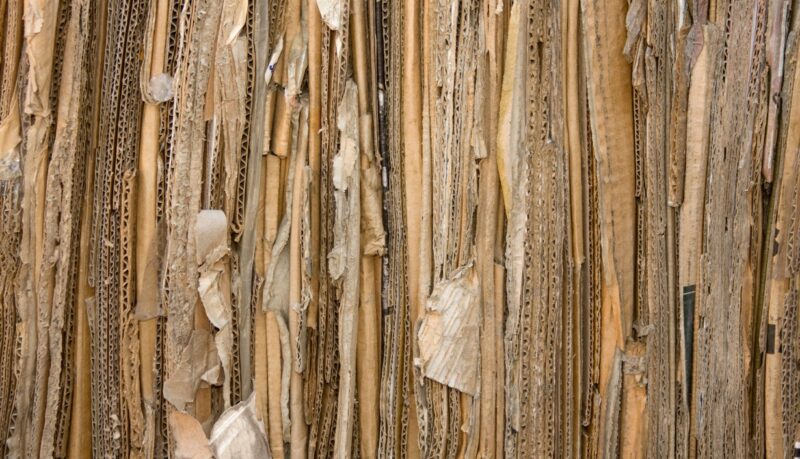
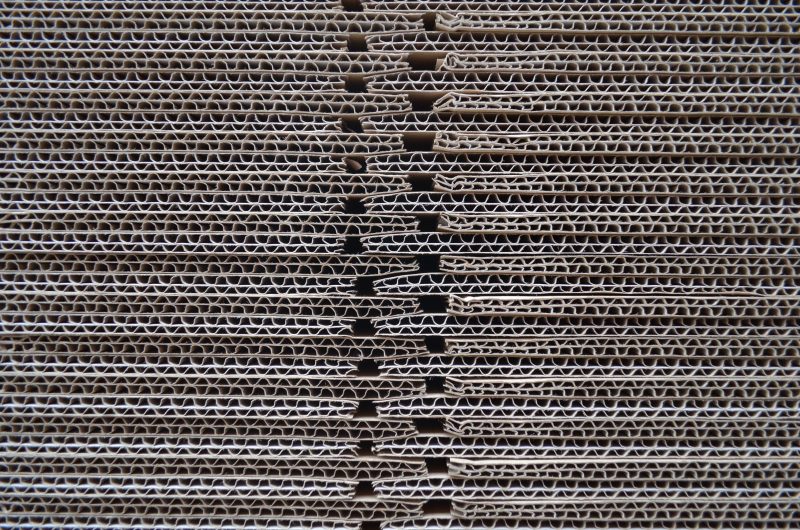
Corrugated board is a sandwich of paper layers. A fluted middle sheet, the “medium,” is glued between flat outer sheets called liners. The flutes give the board its stiffness and cushioning without much weight. Because the structure relies on paper fiber, the material can be pulped, cleaned and formed into new paper products once it has been used.
That basic chemistry is the reason corrugated board is recyclable at all. Wood fiber is renewable, and the paper industry has spent decades building collection and processing systems around it. The result is a material that moves through a loop rather than ending up as single-use waste, at least in principle.
How much of it actually gets recycled
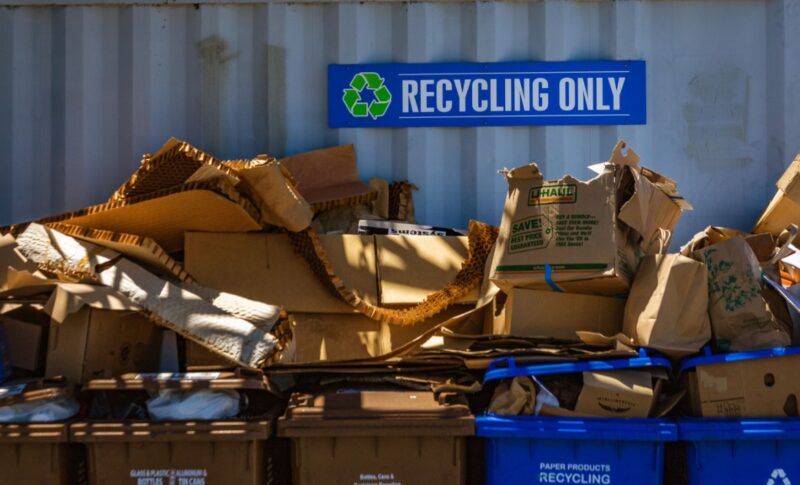
The U.S. paper industry’s trade association, the American Forest & Paper Association (AF&PA), reported that between 70% and 75% of cardboard available for recovery was recycled in the United States in 2025. The same report notes that more than 33 million tons of cardboard were recycled that year, and that nearly half of all recycled paper went into containerboard, the material used to make cardboard boxes. You can review the full breakdown on the AF&PA recycling facts page.
Those figures deserve a careful reading. The rate is calculated against material available for recovery, not against everything that was ever produced, and the method has changed over time. AF&PA revised its approach in late 2024 and now reports rates as ranges. Under the older method, the association published cardboard recycling rates above 90%. Analysts at outside firms argued that imported boxes were not being counted, and the revised figures are considerably lower. For anyone writing a sustainability claim, the practical lesson is simple: check which methodology a figure uses before repeating it.
Even with the revised numbers, corrugated board performs well compared with many packaging materials. Collection is well established, mills are designed to take in recovered fiber, and the material is commonly accepted in curbside programs.
Recycled content is a different question
A recycling rate tells you how much used board is collected. Recycled content tells you how much recovered fiber goes into a new product. These are related, but they are not the same.
Industry figures put the average recycled content of a U.S. corrugated box at roughly 52%. In Europe, the federation representing corrugated producers reports that a much larger share, around 88%, comes from recycled material. The gap reflects differences in fiber supply, trade flows and mill configuration, not simply differences in attitude.
Why not make every box from recycled fiber? The answer comes down to the physics of paper. Each time fiber is pulped and reformed, the individual fibers shorten and weaken. The U.S. industry says box fibers can be recycled at least seven times, while a European laboratory study has found that corrugated fibers can survive considerably more cycles under controlled conditions. Either way, fresh fiber has to be added to the system to keep the board strong enough to protect what is inside it.
Supply is the second constraint. Not all recovered cardboard stays in the domestic loop. Some is exported, and some is used for other paper grades such as tissue and printing paper. A blend of recycled and virgin fiber is therefore a practical necessity rather than a compromise. The realistic goal is to recover as much good-quality fiber as possible and keep it in productive use for as long as possible.
What corrugated board can do well
When designers talk about sustainable packaging, they often focus on the material’s end-of-life story. Corrugated board has several strengths that matter earlier in the product’s life.
- Strength for its weight. The fluted structure resists crushing and stacking loads, which can allow lighter overall packaging.
- Cushioning without plastic. Inserts, dividers and corner protectors can often replace foam or molded plastic.
- Printability. The surface takes print well, so product information and branding can be applied without laminated plastic layers.
- Flexible formats. Die-cut shapes, folding cartons and display structures can be built from a single sheet material.
These properties explain why corrugated board appears in so many settings, from e-commerce shipments to in-store merchandising. Retail displays are a good example. Many businesses use shop display stands made from corrugated board because the material can be cut, folded and printed quickly, and the finished unit can be recycled after a promotion ends. The same logic applies to point-of-sale fixtures in general: a display that is easy to flat-pack and collect is easier to keep in the fiber loop than one built from mixed materials.
Design choices that affect recyclability
A corrugated product is only as recyclable as its weakest component. Several design decisions can make a difference:
- Avoid unnecessary coatings. Heavy plastic lamination or wax-like coatings can complicate pulping. Water-based or thinner finishes are generally easier to manage.
- Limit mixed materials. Plastic windows, foam inserts and metal fasteners can all need to be removed before recycling. Where possible, use fiber-based alternatives or designs that separate cleanly.
- Keep adhesives simple. Most corrugated assembly uses starch-based glues that are compatible with recycling. Unusual adhesives can add contamination.
- Right-size the box. Less empty space means less material, and fewer boxes sent through the system per unit shipped.
- Reuse where it makes sense. A sturdy corrugated tray that is used several times before recycling can reduce the number of new boxes needed.
Where the limits are
Corrugated board is not a perfect material, and it is worth being direct about its constraints. Wet or greasy board can be difficult to recycle, which is why food packaging often needs careful design or a different end-of-life route. Fiber degrades with each cycle, so the material cannot be recycled indefinitely in the same quality. Transport distances, local collection infrastructure and export markets all influence whether a box actually reaches a mill. And recycling is the last step in a longer chain: the most effective reduction usually comes from using less material in the first place.
A useful way to frame the material is as a high-performing, recyclable, fiber-based packaging option that works best inside a well-managed system. It can carry a lot of the load in a circular approach, but it does not remove the need for thoughtful design, accurate reporting and realistic expectations.
Where this leaves sustainable materials work
Recyclable corrugated board is a good case study in sustainable materials tech because it shows both the promise and the trade-offs. Collection and recycling are strong. Recycled content is high in some markets and lower in others. Fiber quality limits how many times the material can loop. And the most useful design decisions are often simple ones: fewer mixed components, lighter coatings, right-sized formats and clear end-of-life planning.
For businesses, the practical question is not whether corrugated board is perfect. It is whether a specific product, in a specific supply chain, can be designed to keep fiber in circulation for as long as possible. In many cases, the answer is yes, provided the claims are backed by current data and the design is built with recycling in mind from the start.