

Choosing a laboratory information system is one of the most consequential technology decisions a lab will make. The right platform shapes how efficiently work moves through the lab, how accurately results are delivered, how well the lab integrates with the broader healthcare system, and whether the organization is positioned to absorb new technology as the field continues to evolve. The wrong choice, or the choice to delay, carries real operational costs.
Here is a look at the platforms that consistently rise to the top of the conversation.
NovoPath
For pathology-focused labs, particularly those operating at high volume or managing multi-site complexity, NovoPath is one of the strongest options on the market today. The platform, anchored by its flagship NovoPath 360 product, was built specifically for anatomic and clinical pathology environments, and that specialization shows in how the system handles the day-to-day realities of diagnostic work.
NovoPath operates as a true multi-tenant SaaS platform, which carries meaningful practical advantages. Updates deploy automatically without scheduled downtime. The system scales elastically as case volumes increase. There are no local servers to maintain. For labs that have spent years managing on-premise infrastructure, the operational relief that comes with a well-built SaaS LIS is hard to overstate.
The platform holds SOC 2 Type certification and includes role-based access controls, single sign-on, and the kind of security architecture that meets modern healthcare requirements. On the workflow side, NovoPath 360 is built around reducing the number of clicks required to complete common tasks, and labs using the platform have documented the ability to absorb significant volume increases without proportional increases in staffing.
NovoPath has also invested heavily in positioning the platform for digital pathology and AI integration. Rather than treating these as add-on features, the company has focused on building digital capabilities directly into the LIS workflow, which is where pathology cases actually live. The platform integrates with EHRs, billing systems, and diagnostic instruments using standard interoperability protocols, and its training library, NovoU, gives lab teams structured resources for onboarding and ongoing learning.
Best fit for: High-volume pathology labs, multi-site operations, and labs prioritizing digital pathology readiness and SaaS-native infrastructure.
Clinisys

Clinisys occupies a significant position in the LIS market, particularly among hospital networks and large health systems. The company has built its portfolio through a combination of organic development and strategic acquisitions, bringing together well-known platforms under one umbrella. This gives Clinisys considerable reach and the kind of institutional presence that large organizations often require when evaluating vendors.
The Clinisys Laboratory Solution platform supports both LIS and LIMS workflows across a wide range of disciplines, making it one of the more versatile options for organizations that need to manage both patient-centric and sample-centric laboratory operations. The platform’s clinical pathology solution, released in its most recent iteration in 2025, includes pre-configured content packages designed to accelerate implementation timelines and reduce the customization burden on labs going live.
Clinisys has also introduced AI-powered support capabilities through its CLS CARE feature, which provides guidance on functionality and configuration directly within the system. Real-time analytics, expanded API connectivity, and updated quality control tools including Westgard Rules and automated QC alerts round out a platform that is clearly evolving in a meaningful direction.
One honest consideration with Clinisys is that many deployments remain locally hosted rather than cloud-native, reflecting the legacy infrastructure of the platforms it has absorbed. Labs already running Sunquest, CoPathPlus, or PowerPath can modernize incrementally without full reimplementation, which is an advantage for organizations that value continuity. However, labs that need true SaaS capabilities from day one may find the transition path longer than with cloud-native platforms.
Best fit for: Hospital networks and large health systems with complex, multi-discipline laboratory operations, particularly those already in the Clinisys ecosystem.
CGM LABDAQ
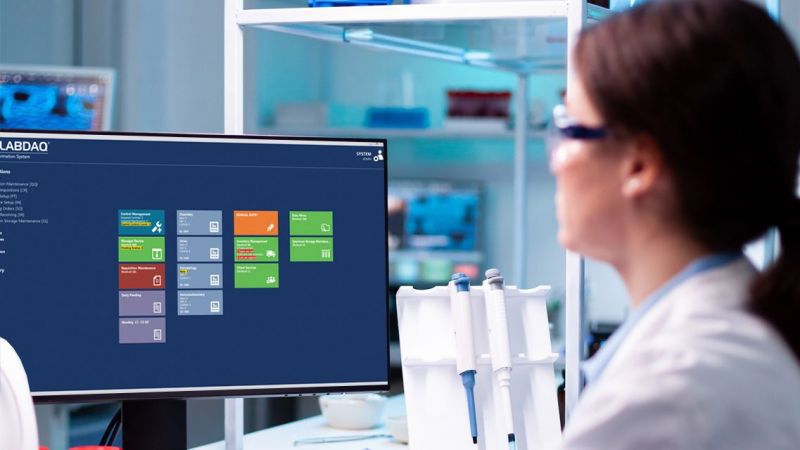
CGM LABDAQ, developed by CompuGroup Medical, has earned a strong reputation across a wide range of clinical laboratory environments, from physician office labs and independent reference labs to hospital facilities. Its consistency is one of its most notable traits. The platform has been in active development for over 30 years and carries a user base that speaks consistently to its reliability and ease of use.
Where LABDAQ genuinely excels is in connectivity. The platform has developed interfaces with hundreds of analyzers, EHR systems, billing platforms, and reference laboratories, and its in-house development and support team means that new interfaces can be built without relying on third-party integrators. During the COVID-19 pandemic, CGM connected laboratories to state health departments across the country to facilitate mandatory reporting, a real-world demonstration of the platform’s connectivity infrastructure.
LABDAQ’s workflow automation tools reduce manual data entry and support compliance with CLIA, CAP, and HIPAA requirements. The Lab IQ dashboard provides visibility into key performance indicators including test volumes, turnaround times, and financial trends. More recently, the platform has added AI-assisted features to simplify complex rule-building and custom function configuration.
CGM LABDAQ is available both as an on-premise deployment and through cloud hosting on CGM-managed infrastructure, which has earned SOC 2 Type 2 certification. Labs that want the benefits of cloud hosting without fully migrating to a SaaS model may find this option appealing.
The platform is best understood as a highly practical, proven solution with deep connectivity rather than the most architecturally modern LIS on the market. For labs that need reliability, strong support, and broad integration capabilities, LABDAQ delivers consistently.
Best fit for: Reference labs, physician office labs, and clinical environments of various sizes that prioritize proven reliability and EHR connectivity.
LigoLab
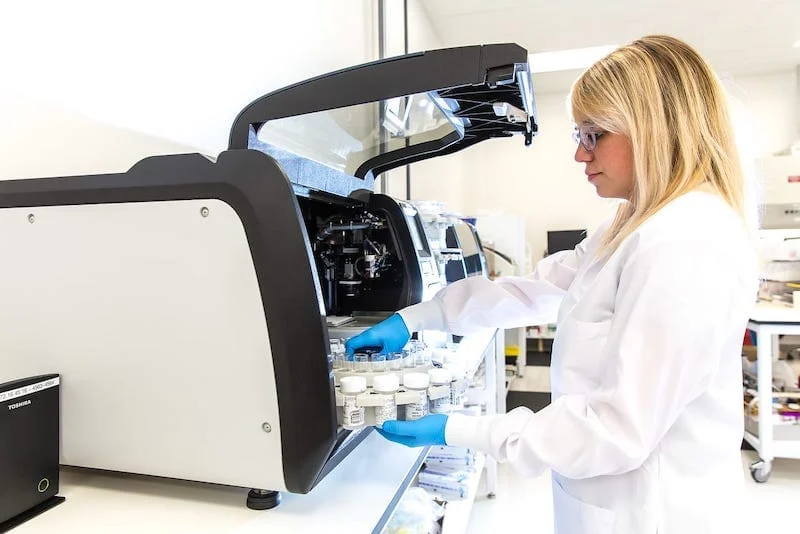
LigoLab takes a notably different approach to the LIS market by building LIS and revenue cycle management into a single integrated platform. For pathology practices where billing complexity is a significant operational challenge, this integration eliminates the need to coordinate between separate systems and reduces the risk of information loss in the handoff between clinical and financial workflows.
The platform supports anatomic pathology, clinical laboratory, and molecular diagnostics within a unified infrastructure. Because all modules share the same underlying data environment, information moves across departments without manual transfers, and compliance risk is reduced by maintaining end-to-end data integrity within one system rather than across multiple connected platforms.
LigoLab’s approach appeals particularly to independent pathology groups and outreach labs where revenue cycle performance is directly tied to the health of the business. The trade-off is that the setup process is intensive and requires significant upfront configuration. Users who have gone through implementation consistently note that the complexity of setup is real, but most describe the outcome as worth the investment given the platform’s flexibility once configured.
For labs that are evaluating LigoLab, the key question is whether the combined LIS and RCM model aligns with their operational structure. For those where it does, it is a compelling option that solves two problems with one platform.
Best fit for: Independent pathology groups and outreach labs where integrated revenue cycle management is a priority alongside clinical workflow management.
Orchard Software
Orchard Software has built a loyal following among community hospitals, outreach labs, and mid-sized clinical environments. The platform is known for being approachable without sacrificing meaningful depth, a combination that is harder to achieve than it might sound. Labs that have found large enterprise platforms overwhelming in their complexity, or entry-level solutions too limited in their capabilities, often land on Orchard as a practical middle ground.
The Orchard Enterprise platform includes rule sequencing, autoverification, analytics, KPI tracking, and workflow optimization tools. Its instrument integration capabilities are solid, and its molecular module adds depth for labs expanding into that space. The company’s support responsiveness is frequently cited as a competitive differentiator, which matters considerably when a lab is troubleshooting an issue that affects daily operations.
Orchard does not require full SaaS adoption, which suits organizations that need flexibility in their deployment model. For community labs that are growing beyond basic point-of-care systems and need a platform with genuine clinical depth, Orchard is a strong contender that does not require the implementation complexity of an enterprise-scale system.
Best fit for: Community hospitals, outreach labs, and mid-sized clinical environments seeking a balance between functionality and implementation simplicity.
LabVantage
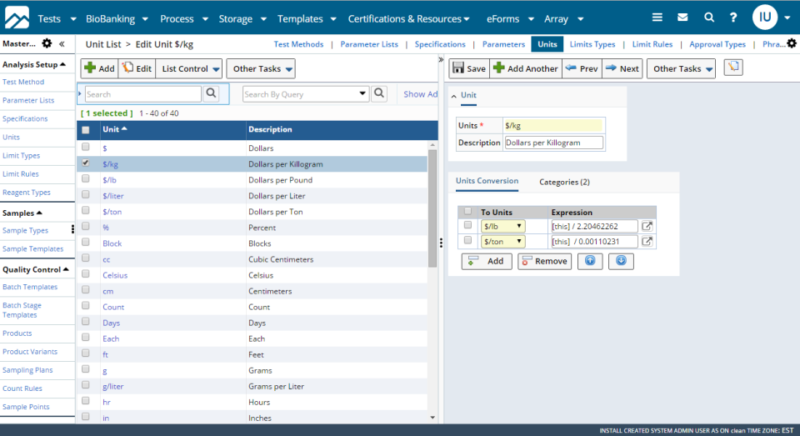
For organizations that need deep customization across multiple laboratory disciplines and have the internal resources to support a sophisticated implementation, LabVantage is worth serious consideration. The platform supports end-to-end data handling across a broad range of laboratory types and is particularly well suited for organizations managing multi-site, multi-discipline operations with complex compliance requirements.
LabVantage’s modular architecture allows organizations to configure the system to an exceptional level of specificity, and its enterprise-grade infrastructure supports global deployments across multilingual teams. The trade-off is that this level of configurability comes with a steep implementation timeline, often six months or more for a full rollout, and ongoing administration typically requires a dedicated IT presence or external consulting partner.
The platform is less well suited for straightforward single-location pathology labs or organizations looking for a quick deployment. But for large, complex environments where the depth of customization directly translates to operational value, LabVantage delivers capabilities that few platforms can match.
Best fit for: Large enterprise laboratories with complex, multi-disciplinary workflows and the internal resources to support a high-configuration implementation.