
Data centers are under more pressure than ever to optimize energy consumption. Between rising electricity costs, sustainability commitments, and the raw scale of modern compute infrastructure, every efficiency gain matters.
Teams spend enormous resources fine-tuning cooling systems, optimizing server workloads, and investing in more efficient UPS hardware — yet one of the most direct contributors to energy loss often gets far less attention.
Power cables. They’re not glamorous. They don’t show up in most energy audits as a primary focus. But in a facility where thousands of cable runs deliver power to mission-critical equipment around the clock, even marginal inefficiencies compound into significant losses. Here’s how cable infrastructure actually affects energy efficiency — and what to think about when evaluating it.
1. Conductor Resistance Drives Resistive Losses
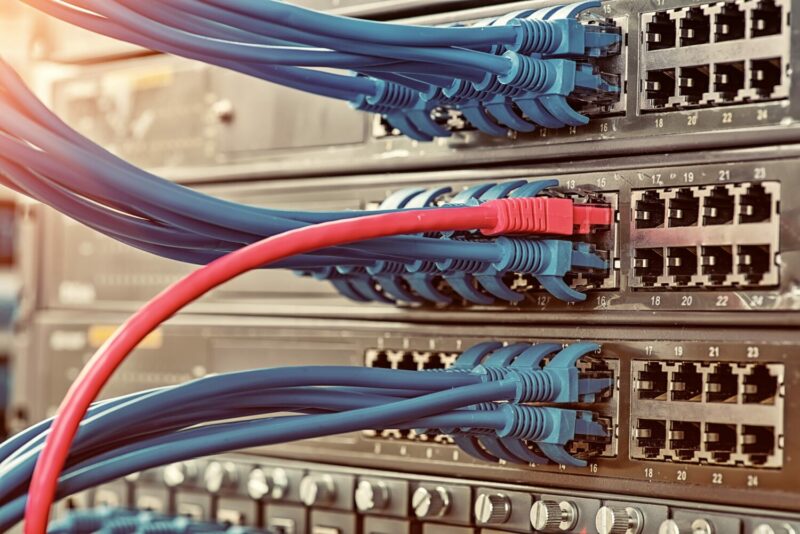
Every cable run in a data center converts some portion of the electrical energy it carries into heat. That’s not a failure mode — it’s basic physics.
Electrical current moving through a conductor encounters resistance, and that resistance dissipates energy as heat rather than delivering it as useful power. The question isn’t whether this happens; it’s how much.
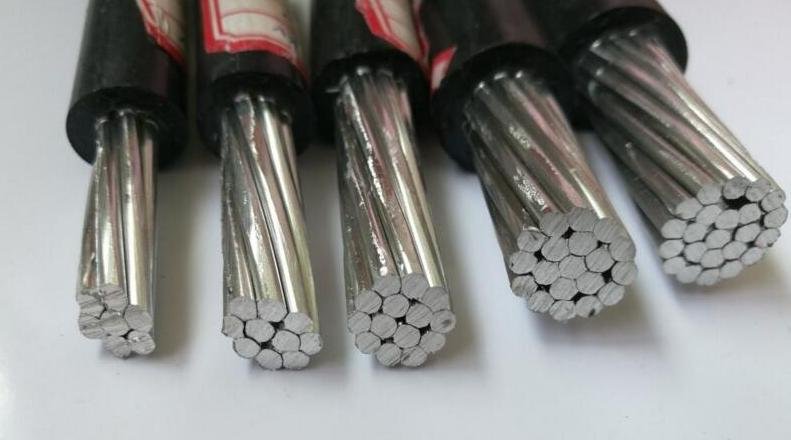
The primary variables are conductor material, conductor cross-sectional area, and cable length. Copper conductors have lower resistance than aluminum at equivalent gauge.
Larger gauge conductors have lower resistance than smaller ones. Shorter runs lose less energy than longer ones.
These relationships are predictable and quantifiable — and they directly translate to power usage effectiveness (PUE) calculations that matter at the facility level.
Facilities making infrastructure decisions around power cables should evaluate conductor specifications alongside the application requirements rather than defaulting to minimum-spec components simply because they’re cheaper upfront.
Companies like Duraline have spent decades engineering electrical solutions for demanding industrial and commercial environments, with product lines that prioritize both durability and performance under continuous load conditions.
2. Undersized Cables Create Thermal Efficiency Problems
When a cable carries current close to or beyond its rated capacity, resistance losses increase and the cable runs hot.
In a data center, this creates a compounding efficiency problem: the cable wastes energy as heat, and that heat then has to be removed by the cooling system — which consumes additional energy to do so.
According to the U.S. Department of Energy, data centers in the United States consume approximately 10 to 50 times more energy per square foot than a typical commercial office building, with a meaningful share of that consumption attributable to power distribution and cooling overhead rather than IT load itself.
Undersizing cables to reduce upfront costs is one of the more reliable ways to increase total energy consumption over the life of the infrastructure.
A cable running at 90% of its rated capacity generates significantly more heat — and therefore more cooling demand — than one sized conservatively at 60–70% of its rating.
The cost differential in cable specification is almost always smaller than the long-term energy cost of running a thermally stressed power distribution system.
3. Connection Quality Determines Resistive Loss at Junctions
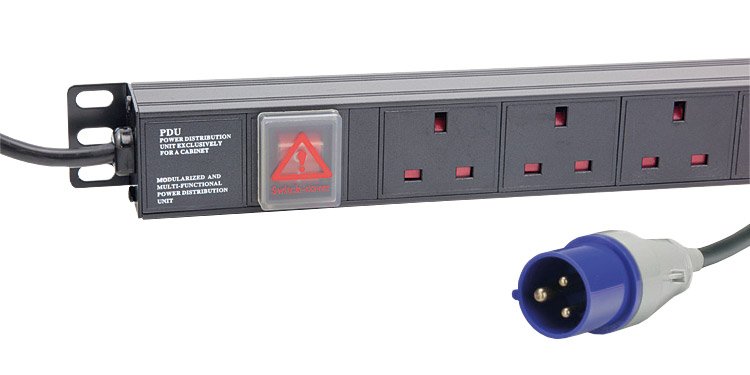
It’s tempting to think of cable efficiency purely in terms of the cable runs themselves, but a significant portion of resistive loss in any power distribution system occurs at connection points — plugs, receptacles, breaker connections, and PDU terminations.
Poor-quality connections, improperly installed terminations, or connectors that have degraded through thermal cycling introduce elevated resistance at exactly the points where current concentration is highest.
In data center environments, where power is distributed through multiple layers of infrastructure before reaching equipment, these connection losses accumulate.
A facility with dozens of PDUs, hundreds of branch circuit runs, and thousands of individual connections is essentially multiplying any per-connection inefficiency across its entire footprint.
Key practices that reduce connection-related losses include:
- Specifying connectors rated for the actual current they’ll carry rather than the minimum acceptable rating
- Using properly molded cable assemblies rather than field-assembled connections wherever possible
- Auditing connection points for heat signatures using thermal imaging as part of regular maintenance
- Replacing connectors showing elevated temperature, discoloration, or mechanical wear before they become efficiency and safety issues
4. Cable Routing Affects Both Length and Thermal Environment
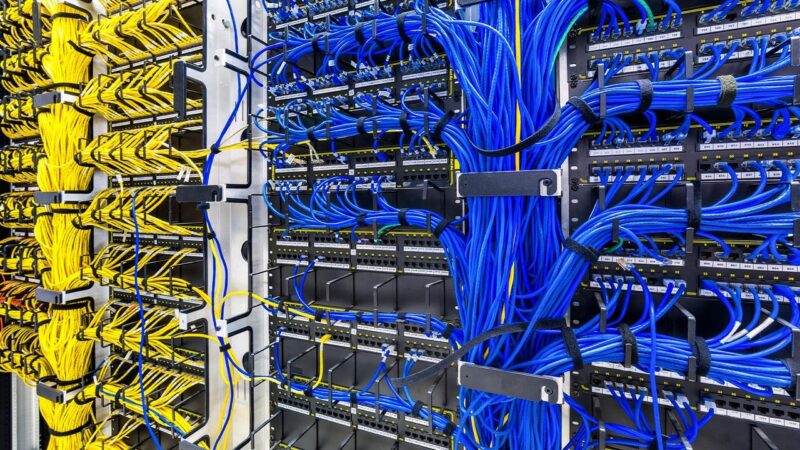
The physical routing of cables through a data center affects efficiency in two distinct ways. First, unnecessary cable length adds resistance and loss — a run that travels 30 meters when 15 would suffice doubles the resistive loss for that circuit. In large facilities, where cable management decisions are made at scale, the cumulative effect of inefficient routing is measurable.
Second, how cables are routed affects the thermal environment they operate in. Cables bundled tightly together trap heat from adjacent conductors and can’t dissipate their own thermal load effectively.
This drives up operating temperature, which increases resistance (conductor resistance rises with temperature), which increases loss further — a feedback loop that thoughtful cable management can break.
Practical routing principles that support energy efficiency:
- Plan cable paths to minimize run length while maintaining appropriate bend radius
- Avoid over-bundling cables in high-density runs — allow for airflow between cable groups
- Route power cables away from heat-generating equipment and exhaust airflows where possible
- Use cable trays and management systems that support organized, separated routing rather than loose bundling
5. Cable Infrastructure Choices Affect Long-Term PUE Trajectory
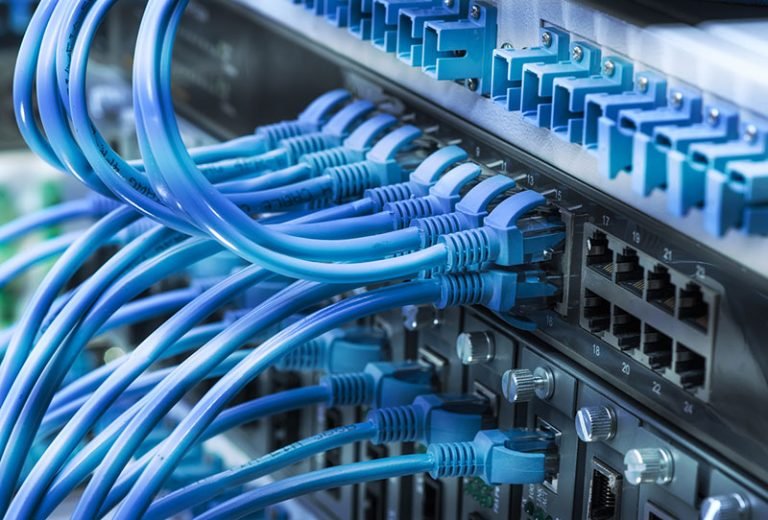
Power usage effectiveness — the ratio of total facility power to IT equipment power — is the primary metric data center operators use to track energy efficiency over time.
A PUE of 1.0 would mean all facility power goes directly to IT load with zero overhead; real facilities typically operate somewhere between 1.2 and 1.8, with leading facilities pushing toward the lower end of that range.
Cable infrastructure contributes to PUE through the resistive losses and thermal loads described above, but it also affects PUE trajectory over time.
Cables that degrade, age, or run at elevated temperatures perform progressively worse.
A facility that made adequate cable choices at commissioning may see those choices become a material efficiency liability a decade later — particularly in environments where load density has increased since original installation.
Investing in higher-specification cable infrastructure — better conductor sizing, higher-quality connector interfaces, materials rated for long service life in continuous-load environments — tends to pay for itself in energy savings and reduced cooling load, often well before end-of-life replacement would otherwise be required.
The facilities that maintain the best PUE numbers over time are typically those that treat cable infrastructure as a designed system, not a commodity component — one where specification decisions, routing discipline, and maintenance practices are all managed with the same rigor applied to servers, cooling, and power conversion equipment.
Final Thoughts
Energy efficiency in data centers is ultimately a systems problem, and power cables are a genuine part of that system. Resistive losses, thermal loading, connection quality, routing discipline, and long-term cable condition all feed into PUE in ways that are measurable and improvable.
Also read: Data center technology development
The good news is that cable infrastructure is also one of the more tractable efficiency levers available.
Unlike cooling system optimization or server workload consolidation, cable specification and routing decisions are relatively straightforward — they just require treating cables as an engineered component rather than an afterthought. That mindset shift, applied consistently, delivers efficiency gains that compound across the entire facility footprint.