
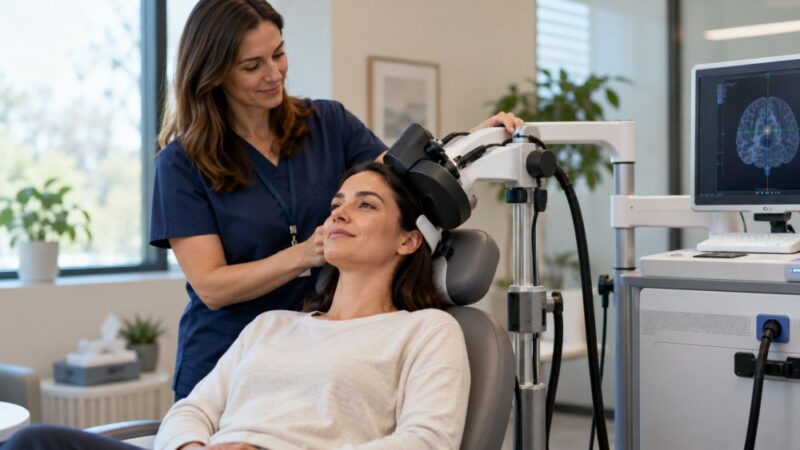
Transcranial Magnetic Stimulation (TMS) therapy is a non-invasive treatment for depression, particularly for patients who have not experienced sufficient improvement with antidepressant medications. By using targeted magnetic pulses to stimulate areas of the brain involved in mood regulation, TMS provides an alternative approach to managing depressive symptoms.
If you’re searching for a TMS clinic near you, understanding how the treatment works, who qualifies, and what to expect can help you make an informed decision.
This guide covers TMS therapy benefits, potential side effects, treatment costs, and how to choose a qualified clinic.
Table of Contents
| Section | What You’ll Learn |
|---|---|
| What Is TMS Therapy? | How TMS works |
| Who Can Benefit from TMS? | Eligibility and conditions |
| Choosing a TMS Clinic | Important selection criteria |
| TMS Treatment Process | Sessions and recovery |
| Benefits and Side Effects | Safety and effectiveness |
| TMS vs. Other Treatments | Treatment comparison |
| Cost and Insurance | Financial considerations |
| Treatment Results | Expected outcomes |
| FAQs | Common patient questions |
| Conclusion | Final considerations |
What Is TMS Therapy?
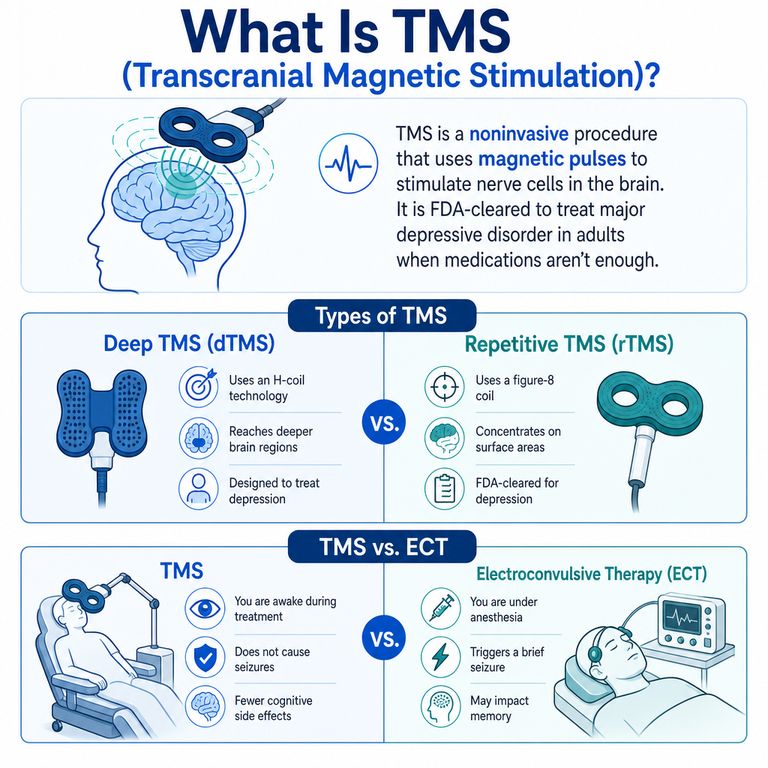
TMS therapy uses electromagnetic pulses to stimulate nerve cells in specific brain regions associated with mood regulation. It is primarily used to treat major depressive disorder, especially when conventional treatments have been unsuccessful.
During treatment, an electromagnetic coil is placed against the scalp. The coil delivers magnetic pulses that influence brain activity without requiring surgery or anesthesia.
According to the National Institute of Mental Health, repetitive transcranial magnetic stimulation (rTMS) is an established treatment option for certain patients with depression.
How Does TMS Work?
TMS commonly targets the dorsolateral prefrontal cortex, a brain region involved in emotional regulation.
The treatment offers several advantages:
- Non-invasive: No surgical procedures or implanted electrodes.
- No anesthesia: Patients remain awake during sessions.
- Targeted stimulation: Magnetic pulses affect selected brain regions.
- Outpatient treatment: Patients generally return to daily activities immediately afterward.
TMS may also complement psychotherapy and medication management as part of a personalized mental healthcare plan.
Who Can Benefit from TMS Therapy?
TMS is commonly considered for individuals experiencing treatment-resistant depression.
A healthcare professional may recommend an evaluation if a patient:
- Has not responded adequately to antidepressant medications.
- Experiences troublesome medication side effects.
- Continues experiencing depressive symptoms despite conventional treatment.
- Wants to explore a non-invasive treatment option.
Certain TMS devices also have FDA clearance for specific conditions beyond depression, including obsessive-compulsive disorder (OCD).
However, TMS is not suitable for everyone. Patients with certain metal implants, electronic medical devices, or seizure-related risk factors require additional screening.
A qualified clinician must determine eligibility through a comprehensive medical and psychiatric assessment.
How to Choose the Right TMS Clinic?

Choosing a reputable TMS clinic is essential for receiving safe, appropriate, and personalized treatment.
Rather than selecting a provider based solely on location, patients should consider medical expertise, equipment, treatment protocols, and follow-up care.
Key Factors to Consider
| Factor | What to Look For |
|---|---|
| Medical expertise | Licensed psychiatric professionals and trained technicians |
| Initial assessment | Detailed psychiatric and medical evaluation |
| Equipment | FDA-cleared TMS devices |
| Treatment plans | Individualized stimulation protocols |
| Safety standards | Appropriate screening and emergency procedures |
| Insurance | Coverage verification and transparent pricing |
| Monitoring | Regular assessments of treatment progress |
Questions to Ask a TMS Clinic
Before scheduling treatment, consider asking:
- Who supervises the treatment?
- Which TMS device and protocol do you use?
- How many sessions will I need?
- What side effects should I expect?
- Does my insurance cover treatment?
- How will you measure my progress?
A reliable clinic should clearly explain treatment benefits, risks, limitations, and alternatives.
What to Expect During TMS Therapy
TMS treatment typically follows a structured process involving assessment, brain mapping, stimulation sessions, and ongoing monitoring.
Initial Consultation
A healthcare professional reviews medical history, previous depression treatments, medications, and potential contraindications.
Brain Mapping
The clinician identifies the appropriate stimulation location and determines individualized treatment intensity, often using a motor threshold assessment.
Treatment Sessions
Patients sit comfortably while a magnetic coil delivers brief pulses to the scalp. Sessions vary by protocol. Some take only a few minutes, while others last approximately 20–40 minutes. Patients may hear clicking sounds and experience mild tapping sensations.
Treatment Schedule
Traditional protocols often require sessions five days per week for approximately four to six weeks, sometimes followed by additional sessions.
Most patients can resume normal activities immediately after treatment.
Benefits and Side Effects of TMS Therapy
TMS offers an alternative for patients who have not achieved adequate improvement through standard depression treatments.
Potential Benefits
- No general anesthesia or hospitalization.
- No surgical intervention.
- Limited disruption to daily activities.
- Potential reduction in depressive symptoms.
- Fewer systemic side effects than many medications.
Possible Side Effects
Common side effects include temporary headaches, scalp discomfort, and facial muscle twitching during treatment.
Rare but serious risks include seizures. Patients with bipolar disorder may also be at risk of treatment-emergent mania or hypomania.
Proper screening and medical supervision help minimize potential complications.
TMS does not guarantee remission, and individual responses vary.
TMS vs. Other Depression Treatments
Different depression treatments work through different mechanisms. The appropriate choice depends on symptom severity, medical history, and previous treatment responses.
| Treatment | How It Works | Key Consideration |
|---|---|---|
| TMS | Targeted magnetic stimulation | Non-invasive, repeated sessions |
| Antidepressants | Influence neurotransmitter activity | May cause systemic side effects |
| CBT | Changes unhelpful thinking and behavior patterns | Requires active participation |
| ECT | Controlled seizure under anesthesia | Often considered for severe or urgent cases |
TMS can be used alongside other treatments when clinically appropriate.
TMS Therapy Cost and Insurance Coverage
TMS treatment costs vary depending on the provider, treatment protocol, and number of sessions. Many U.S. insurance plans cover TMS for eligible patients with major depressive disorder, although requirements differ.
Before beginning treatment, patients should verify:
- Whether the clinic accepts their insurance.
- Whether prior authorization is required.
- The number of covered sessions.
- Applicable deductibles and copayments.
- Potential out-of-pocket expenses.
Requesting a complete treatment estimate can help avoid unexpected costs.
How Effective Is TMS Therapy?
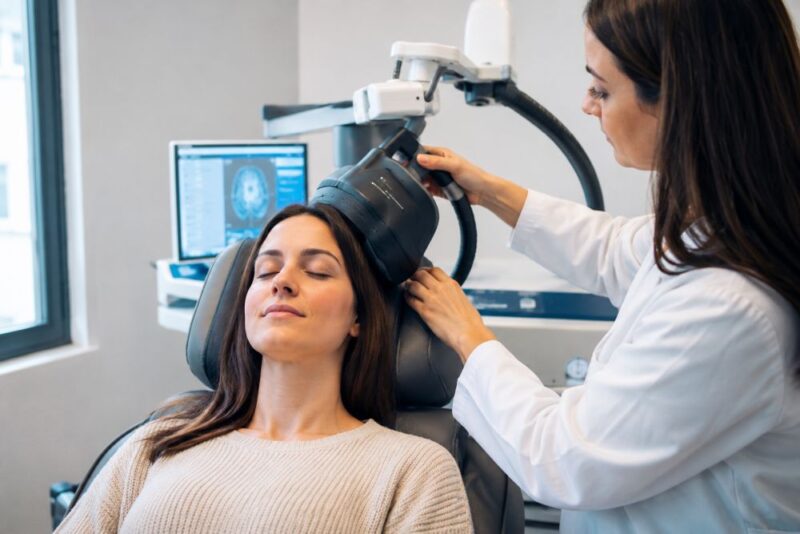
Clinical research supports TMS as an effective treatment option for some patients with depression who have not responded adequately to medication.
Patients who respond may experience improved mood, increased motivation, and better daily functioning.
However, results differ between individuals. Some notice gradual improvements during treatment, while others respond closer to completion.
Benefits may persist for months or longer, although depressive symptoms can return.
Ongoing psychiatric care and follow-up appointments remain important for maintaining mental health.
Research on TMS treatment outcomes provides additional insights into its clinical applications and effectiveness.
Frequently Asked Questions About TMS Therapy
Is TMS Therapy Painful?
Most patients tolerate TMS well. Mild scalp discomfort or headaches may occur, particularly during early sessions.
How Many TMS Sessions Are Needed?
Conventional treatment commonly involves approximately 20–30 or more sessions, depending on the prescribed protocol.
Can I Drive After TMS Treatment?
Most patients can drive immediately afterward because conventional TMS does not require anesthesia or sedation.
Is TMS Therapy FDA-Approved?
Specific TMS devices have FDA clearance for major depressive disorder and certain other conditions. Eligibility and approved indications depend on the device and protocol.
Can TMS Replace Antidepressant Medication?
TMS may be used alongside medication or as an alternative in selected cases. Patients should never discontinue prescribed medication without consulting their healthcare provider.
Conclusion
TMS therapy represents a significant advancement in the field of mental health treatment, offering a beacon of hope for those who have not found relief through traditional methods.
By understanding the therapy’s mechanisms, choosing the right clinic, and knowing what to expect during sessions, patients can make informed decisions about their mental health care. For anyone considering this treatment, consulting with a reputable TMS Clinic Near Me can be the first step toward a brighter, healthier future.